When OMEGA introduced the new Constellation Observatory, the obvious headline was easy enough to grasp. It is the first two-hand watch to achieve Master Chronometer certification. That alone makes it a milestone. But after looking more closely at what sits behind this release, I do not think the real significance lies only in the certification itself, nor even in the simple idea of greater accuracy.
What makes this launch interesting is the shift in mindset behind it.
For a long time, the modern watch industry has been very good at talking about standards, certifications, and rates of performance. Those things matter, and nobody should dismiss them. A chronometer certification or a Master Chronometer certification tells us that a movement, or in the case of METAS a complete watch, has achieved a certain level of performance during testing. But certification, by its nature, is still a defined exercise. It tells you that the watch performed to specification within a controlled framework. Once the watch leaves that environment and enters real life, things become far less neat. Temperature changes, daily wear, resting position, habits of the owner, and the slow passage of time itself all begin to shape how that mechanical system behaves.
That is why I find this release more meaningful than it may first appear.
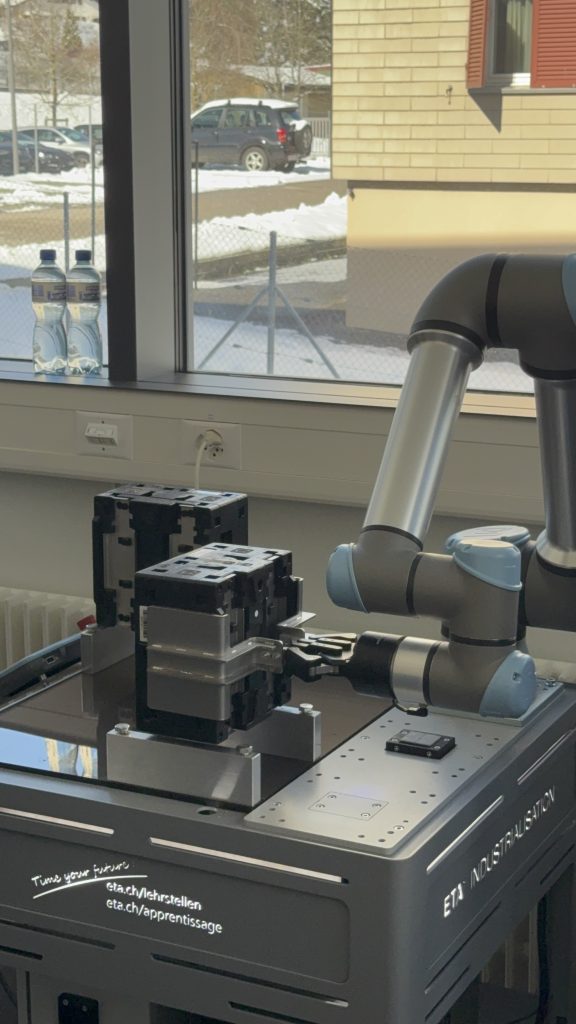
OMEGA’s Laboratoire de Précision is important not simply because it allows a two-hand watch to go through a certification process that previously depended on a seconds hand. That is the breakthrough everybody will quote, and fairly so. But the deeper point is that this new method allows the watchmaker to gather a much richer stream of information about how a movement behaves over time. Instead of treating precision as a one-time result that is either passed or failed, this approach points toward something broader: a way of understanding performance more deeply, in more detail, and perhaps in a way that can shape future watchmaking rather than merely validate the present.
To me, that is where the story really begins.
Mechanical watchmaking today is no longer driven by necessity. No one needs a mechanical wristwatch in order to know the time accurately. Yet that does not make this pursuit irrelevant. If anything, it makes the motivation behind it more important. The enduring appeal of watchmaking lies in the discipline of refinement, in the pursuit of precision within an inherently imperfect system, and in the very human desire to keep improving something even when the practical need for it has already faded.
This is why developments like this still matter.
Accuracy is naturally part of the conversation, but here it feels more like the result of a larger ambition rather than the sole objective. The real advance is in the ability to observe, measure, and learn. A mechanical movement is a sensitive thing. It responds to position, temperature, magnetism, wear patterns, and countless small variables that are often accepted as part of its character. Traditionally, many of these factors were understood through experience, feel, and craftsmanship. There is beauty in that, and I would never want watchmaking to lose it. But there is also value in being able to capture better data and turn that information into deeper understanding.
That is exactly what seems to be happening here.
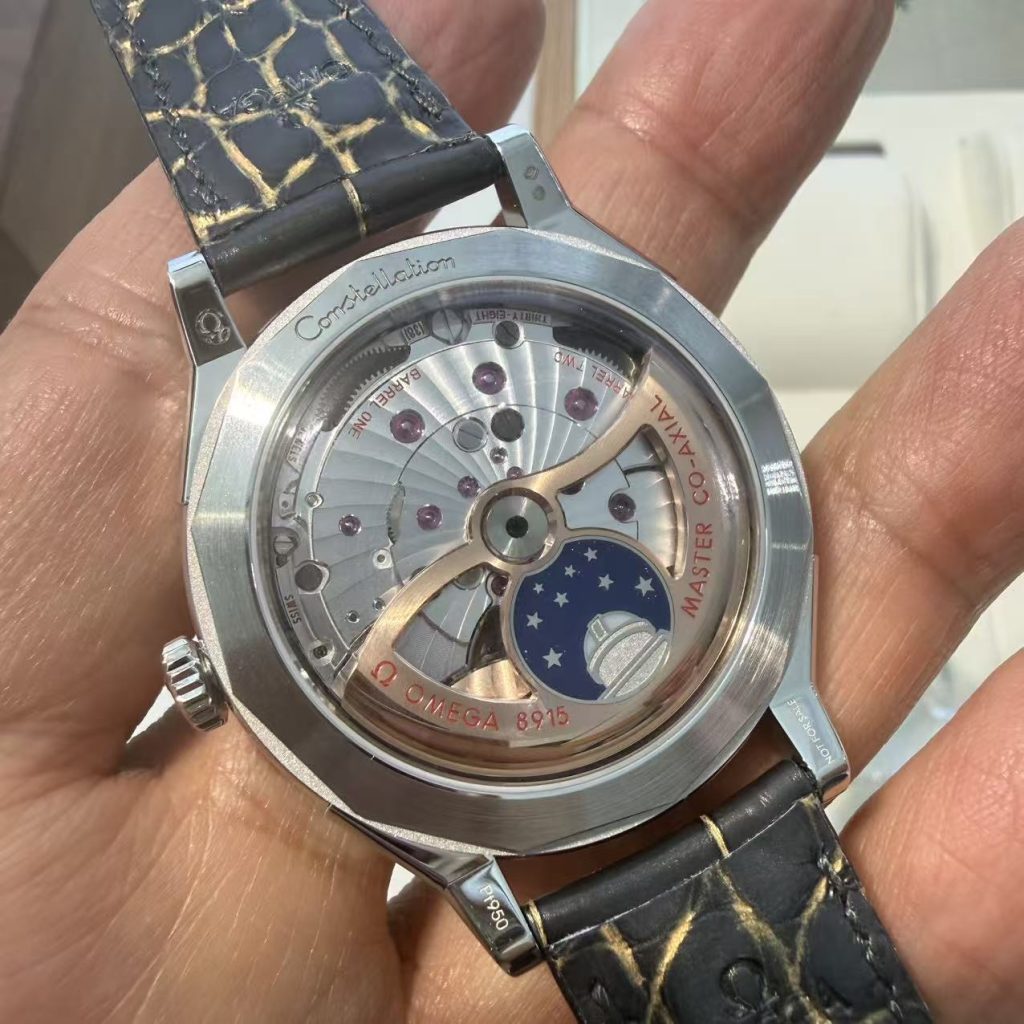
At the same time, OMEGA has been smart not to let the technical story come at the expense of the product. The Constellation Observatory itself has been designed with a strong awareness of the collection’s roots. The 39.4 mm case size feels deliberate. It places the watch in a space that is elegant and wearable, rather than oversized or overly aggressive. The design draws directly from some of the most recognisable historic Constellation elements: the dodecagonal pie-pan dial, the Constellation star at 6 o’clock, the observatory medallion on the caseback, faceted dauphine hands, kite-shaped indexes, and the dog-leg lugs that collectors will immediately associate with earlier eras of the line.
There is also a pleasing sense that OMEGA did not treat heritage as decoration alone. The guilloché finish on the facets of the pie-pan dial recalls the old Grand Luxe pieces, while the nine-row brick-pattern mesh bracelet in 18K Moonshine Gold reaches back to the vintage brick bracelets from the formative Constellation years. These are not random retro touches. They help anchor the watch in the history of a collection that has long stood for certified precision within OMEGA’s world. The range itself is broader than one might first assume. OMEGA is launching the collection across nine references, with two new movements and three levels of expression: Grand Luxe, Luxe, and Standard. The more elevated Calibre 8915 appears in the precious metal watches, while Calibre 8914 powers the O-MEGASTEEL models. Both are built on a skeletonised rotor base, but OMEGA has clearly differentiated them in execution. The Platinum-Gold Grand Luxe piece sounds especially interesting. Its rotor is enamelled with aventurine glass and highlighted by eight stars, while the observatory dome is filled with translucent white opal enamel. That is the kind of detail that suggests OMEGA wanted one watch in the collection to stand not only as a technical flagship, but also as a demonstration of decorative ambition.
The 18K gold models also seem carefully considered. In the Luxe versions, OMEGA uses an 18K Moonshine Gold rotor and balance bridge for the first time in its history, alongside the more familiar 18K Sedna Gold. That may seem like a small point, but it shows that the movement finish and material story are part of the product message, not an afterthought hidden behind the dial. Even the Canopus Gold version appears to have been handled with some restraint, pairing a cleaner external look with an 18K Sedna Gold decorated movement visible through the caseback. Then there are the O-MEGASTEEL models, which may well be the most important commercially. OMEGA’s exclusive steel alloy gives the collection a more everyday footing, but the technical ambition remains. The black ceramic pie-pan dial, in particular, stands out. OMEGA describes it as a significant technical achievement due to the difficulty of realising that dodecagonal form in ceramic. That sounds like one of those details that could easily be overlooked in the flood of launch-day information, but for collectors it is the sort of quiet difficulty that often deserves more appreciation than the headline claim.
The same can be said for the movements. Much of the attention will naturally go to the testing breakthrough, but the watches are also supported by two new Master Chronometer calibres. Here again, the importance is not only that they meet a specification, but that they are part of a broader system of observation and refinement. With more detailed information, regulation can be improved more intelligently. A watchmaker can identify not only that variation exists, but where it appears, under what conditions, and perhaps how it develops over time. That creates a much stronger feedback loop. Insights gained from one stage do not end with that specific test; they can feed back into future regulation, future movement development, and future design decisions. In that sense, the importance of the Laboratoire de Précision is not limited to this one Constellation. It may prove to be even more valuable as a tool for what comes next. That, to me, is far more interesting than simply saying a watch is more accurate. Collectors often talk about progress in watchmaking as though it must always show itself through a dramatic new escapement, a new material, or a visible innovation on the dial side. But progress can also be quieter than that. Sometimes it appears in the way a problem is understood. Sometimes it appears in the methods used to gather information. Sometimes it happens in the background, in a laboratory rather than in the display case, and its effects only become fully visible years later.
The Constellation Observatory feels like one of those moments.
It also feels like the right collection for this kind of statement. Since 1952, the Constellation has been OMEGA’s series-produced chronometer line, and from the beginning every mechanical Constellation was a chronometer. Later, OMEGA pushed forward with the Co-Axial escapement, anti-magnetic technology, and in 2015 the Globemaster became the first watch certified as a Master Chronometer by METAS. Seen against that broader timeline, the Constellation Observatory is not some isolated stunt. It fits naturally into OMEGA’s longer story of certified precision. I also think it is important not to exaggerate what this means for the wearer. There is no need to pretend that the owner of this watch will suddenly experience some dramatic difference in daily life. The advantage is not likely to arrive in the form of some instantly visible leap in performance. It is more subtle than that. The real benefit may lie in improved consistency, better long-term stability, and a more informed approach to the way mechanical watches are regulated and developed. Those are not flashy qualities, but for serious collectors they may ultimately be more meaningful.
At the same time, this should not be misunderstood as some kind of promise of perfect long-term accuracy. Mechanical systems will always remain mechanical systems. Wear, environment, and use will continue to shape performance. No laboratory can eliminate that. What it can do is help us understand those realities more clearly and design with them more intelligently in mind. That is why I keep coming back to the same thought: this release is not really about replacing old standards or inventing a new badge for the sake of marketing. It is about expanding the framework within which watchmaking operates. It builds on existing certification systems, but adds another layer of understanding between the controlled environment of official testing and the messier truth of real-world ownership.
For me, that is the most meaningful part.
In a time when mechanical watches no longer need to justify themselves through utility, their significance increasingly lies in the seriousness of the pursuit. Collectors respond to that. We respond to effort, to intention, and to the refusal to accept that the current limit is the final one. We know that perfection is never fully achievable in a mechanical watch, and perhaps that is exactly why the pursuit remains so compelling. Seen in that light, OMEGA’s latest release is more than a new Constellation and more than a story about certification. It is a reminder that one of the most important evolutions in watchmaking may not be the result itself, but the willingness to keep learning from the behavior of the watch itself.
And that is a pursuit collectors should still care about.