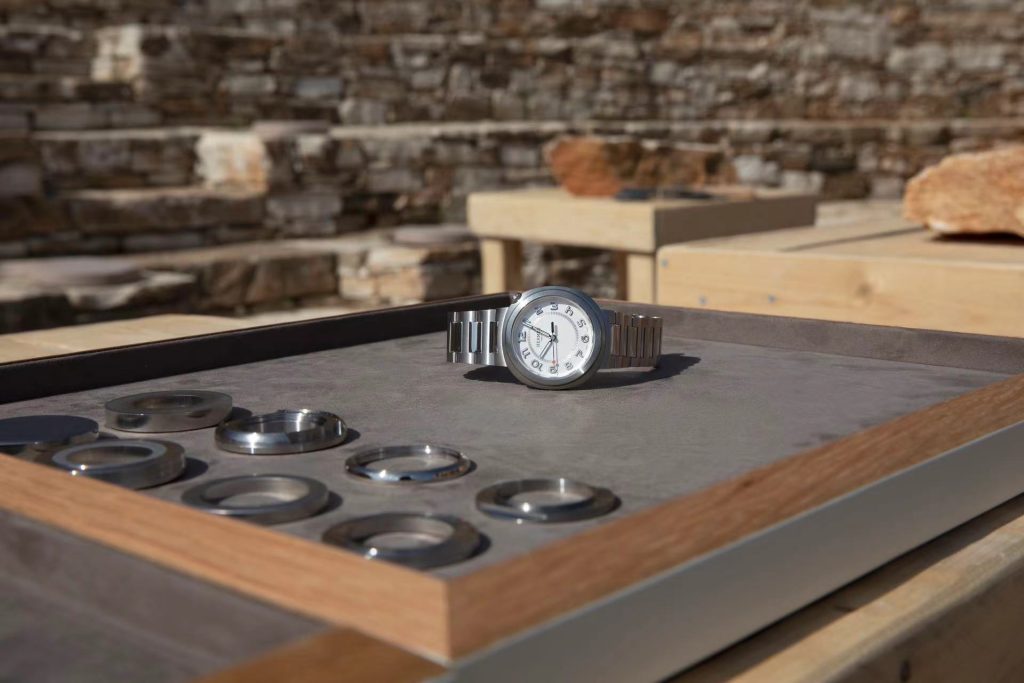
Breguet at the Peak of Watchmaking Innovation

In a market full of vintage reissues, heritage remakes and safe designs, there is one brand quietly doing something much harder: actually pushing mechanical watchmaking forward. Not just in slogans, but in real, measurable, technical innovation.
Right now, that brand is Breguet.
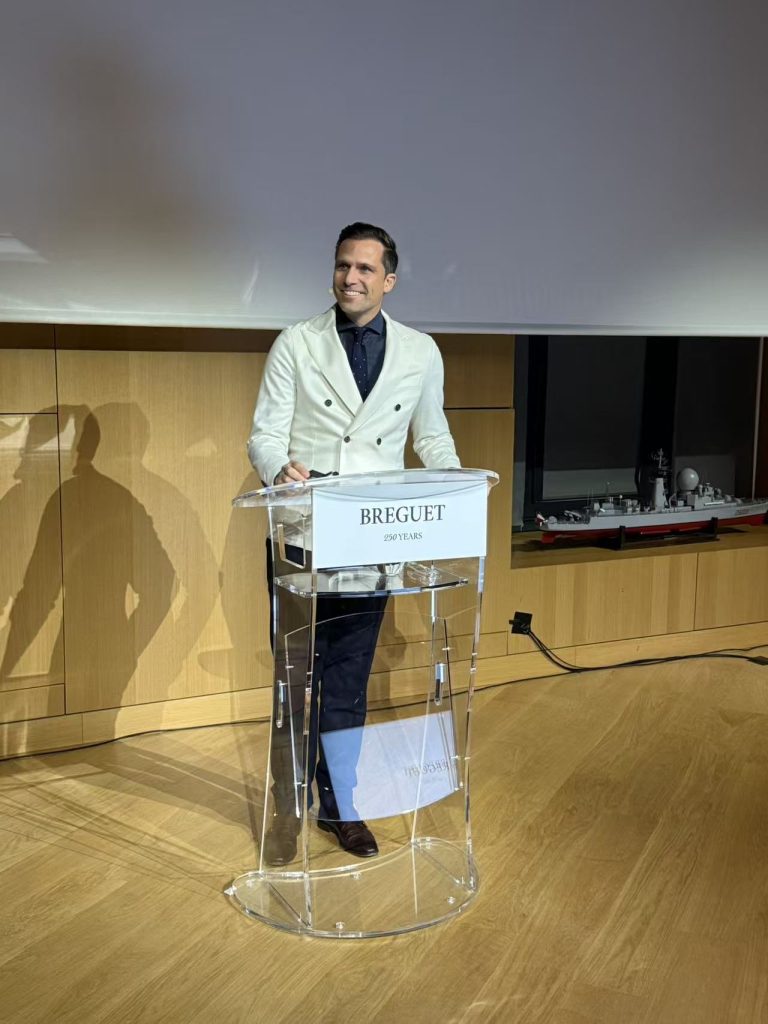
When the Classique Souscription 2025 won the Aiguille d’Or at GPHG 2025, it felt like the industry suddenly remembered Breguet again. But sitting in the National Maritime Museum in Paris, listening to CEO Gregory Kissling present the Experimental 1 and then seeing it on the wrist right after, it was very clear to me: this isn’t a comeback story. This is a brand operating at the top of contemporary watchmaking innovation.
Under Kissling, Breguet isn’t simply honouring its past. It is behaving exactly as Abraham-Louis Breguet once did – using science and engineering to redraw what a mechanical watch can be.
A house built on firsts – still inventing
Breguet’s historical curriculum vitae is familiar: early self-winding watches with heavy platinum weights, the overcoil balance spring, shock protection, marine chronometers for serious navigation, the first wristwatch, split-seconds chronographs, keyless winding, and of course, the tourbillon.
For most maisons, that kind of legacy would be a comfortable place to stop and live off archives and commemorative editions.
Breguet treats it differently. Those inventions are not museum pieces to copy; they are foundations to build on.
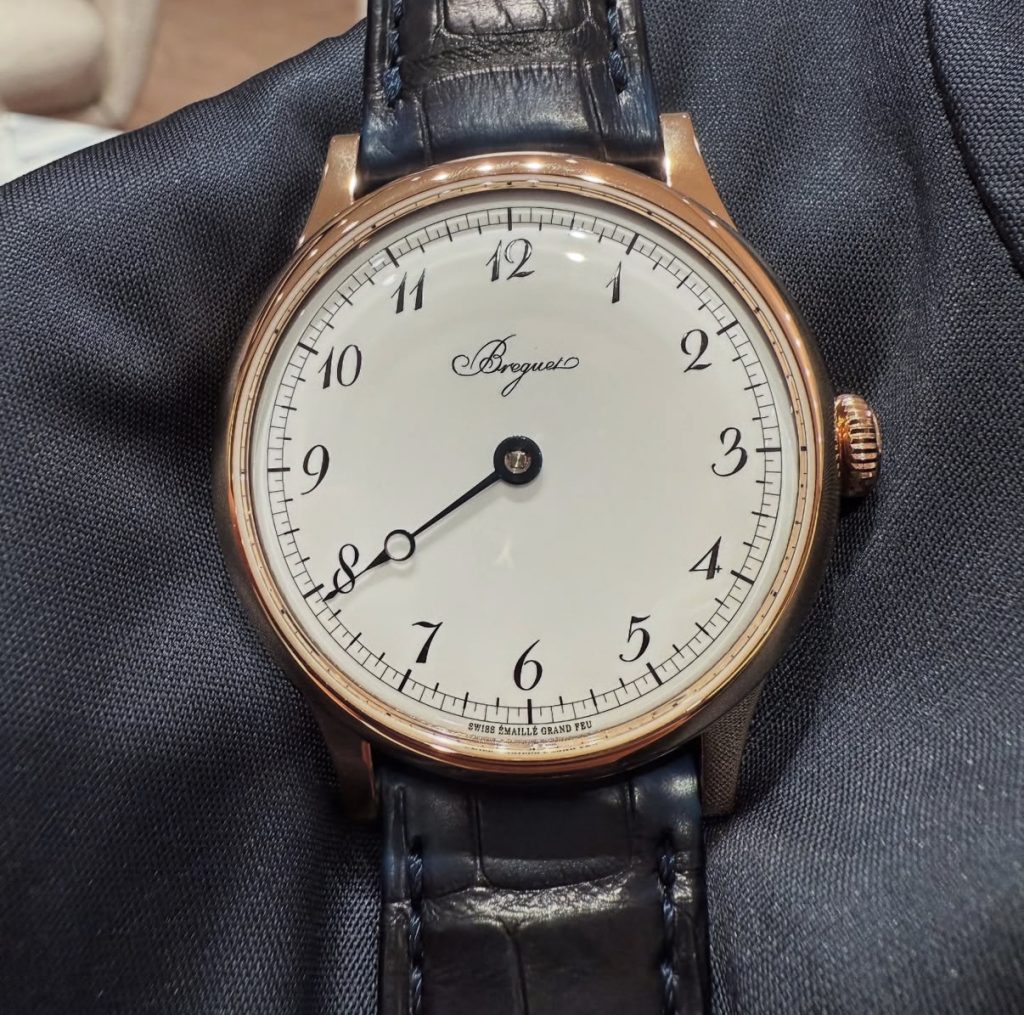
You can see that in the structure of the 250th anniversary collection. The Souscription 2025, the tourbillon 7225, the new Marine Hora Mundi, the latest Reine de Naples, and the striking complications form a clear narrative around precision, energy management, acoustics and design. When you follow the roadshow city by city and then land in Paris for the Experimental 1, the story feels complete: heritage first, then the big leap.
The Experimental 1 is the moment where Breguet stops being polite and shows how far it can go when it decides to build a modern scientific instrument for the wrist.
Experimental 1 – a physics experiment you can wear
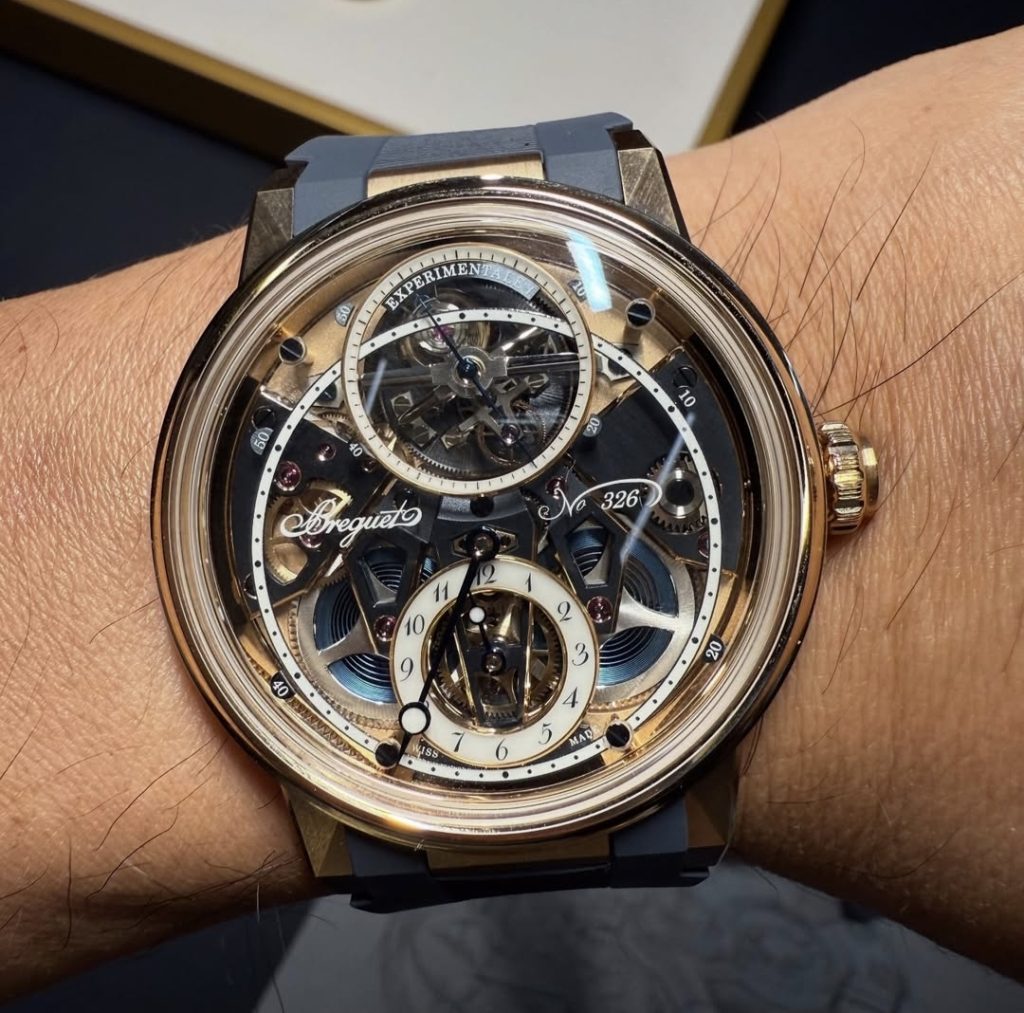
From a distance, Experimental 1 looks like a very serious Breguet sports watch. In the showcase after the presentation, under the museum lights, the watch didn’t come across as fragile or overly precious. It felt like something designed to be used.
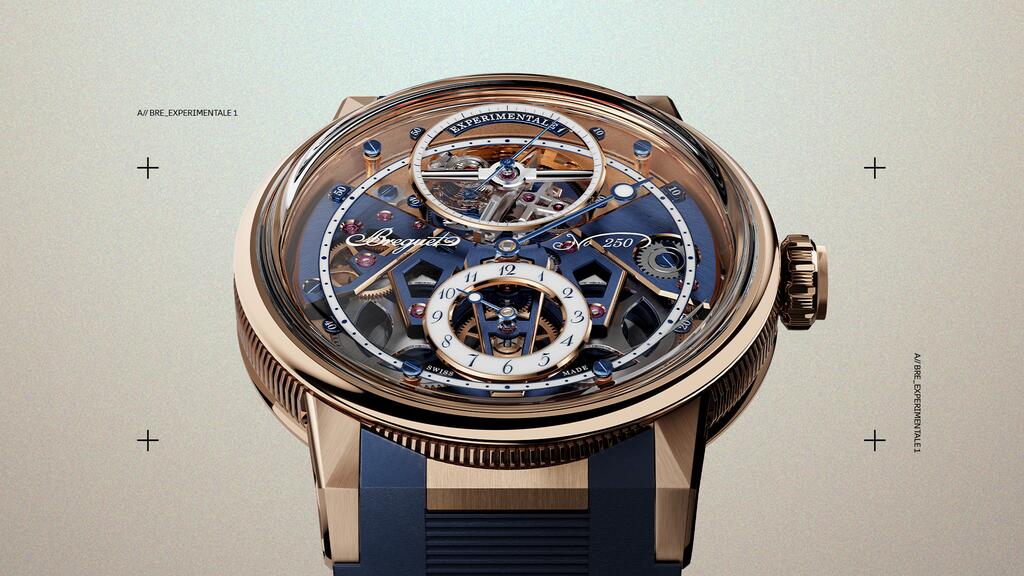
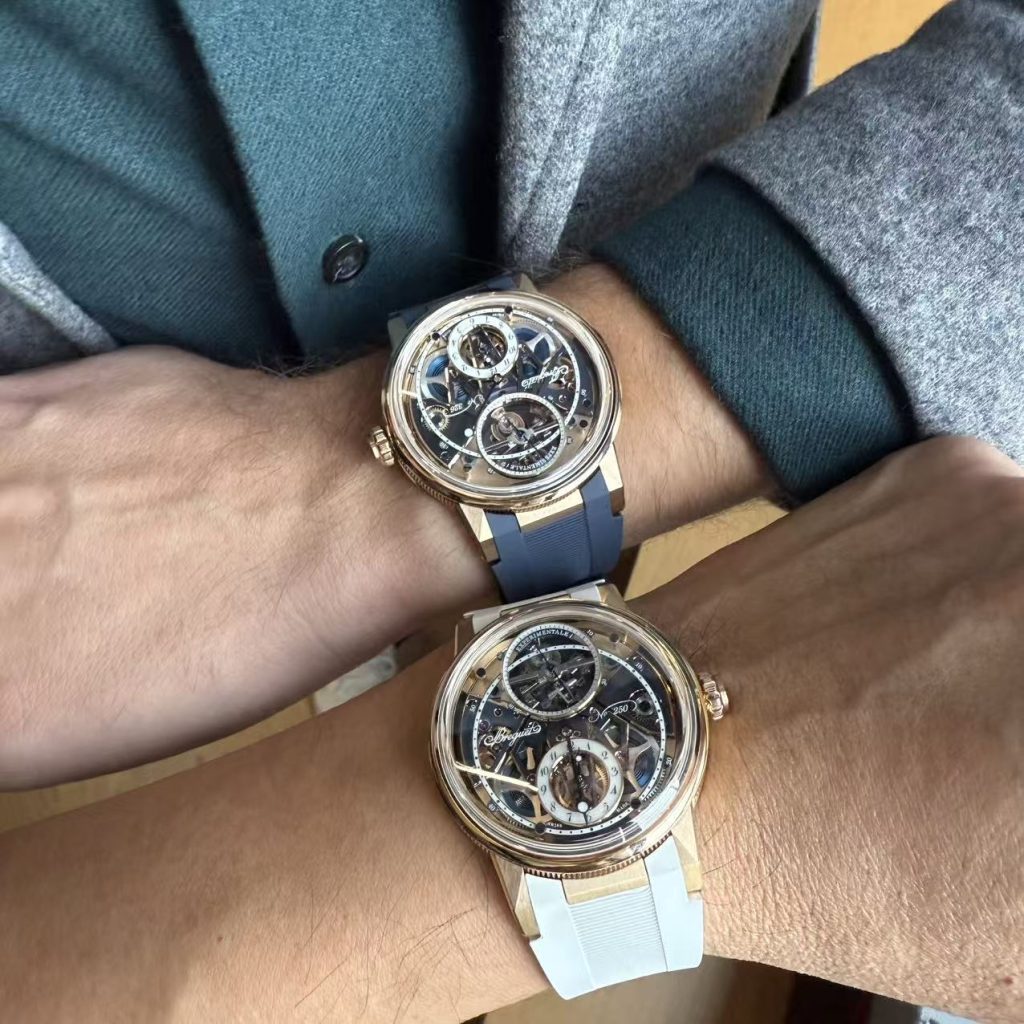
There is a new Breguet-gold case with 100-metre water resistance, a rubber strap with a quick-change system, and a marine-inspired regulator dial: central minutes, separate sub-dials for hours and seconds, luminous Arabic numerals, and a sapphire mainplate held by gold pillars. Turn it over and the bridges glow in deep green, with the tourbillon dominating the view.
Inside that familiar Breguet language, something genuinely radical is happening.
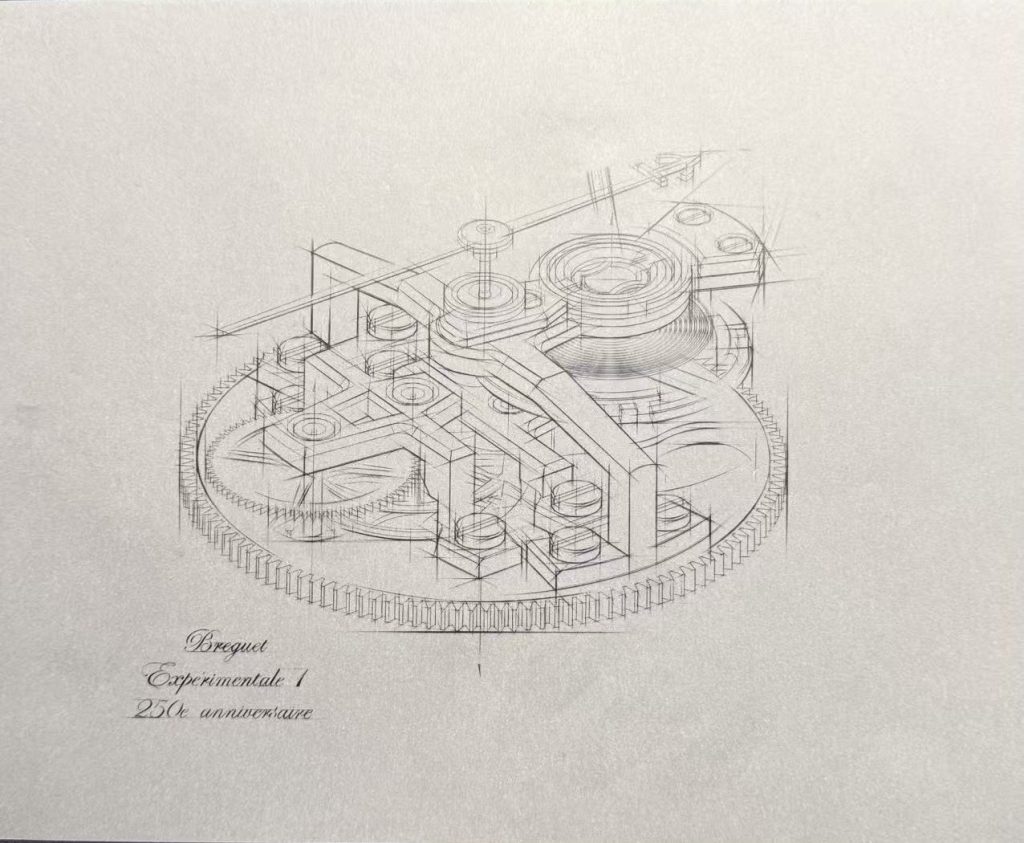
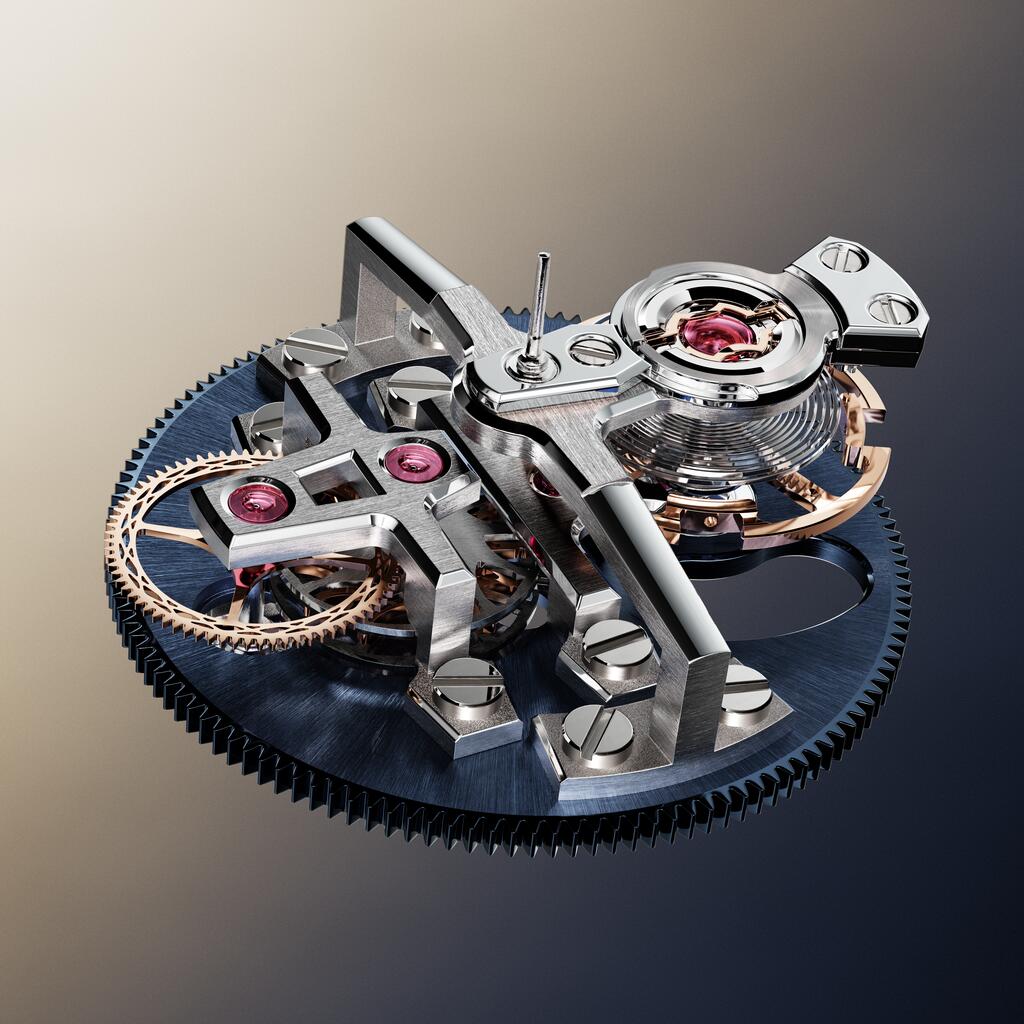
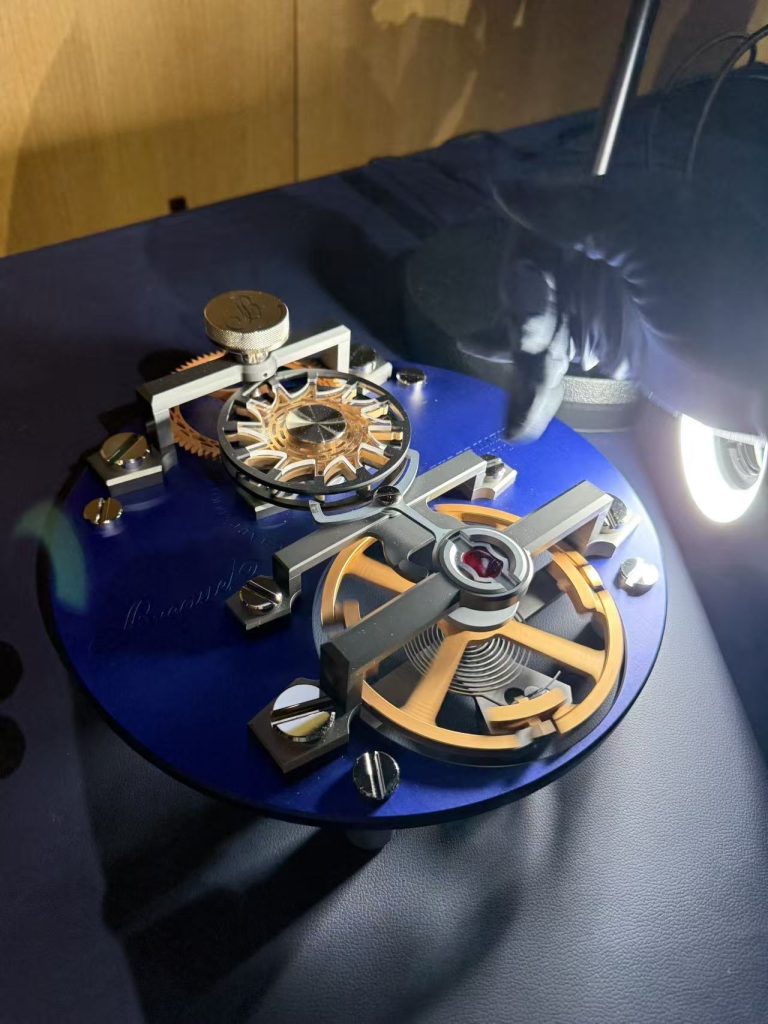
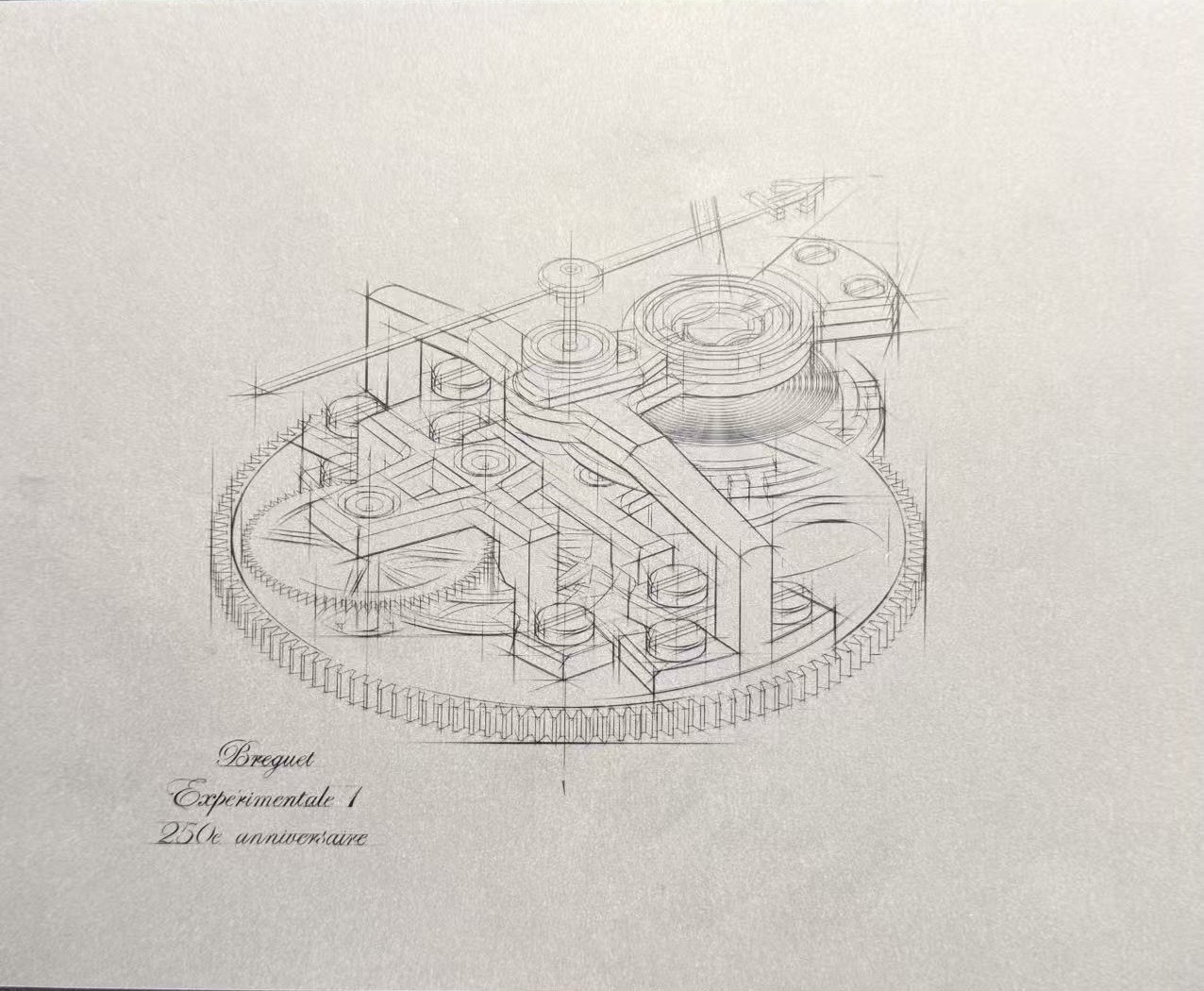
The movement combines a 10 Hz tourbillon with a magnetic constant-force escapement. In simple terms, a traditional mechanical watch loses consistency because metal parts in the escapement are constantly colliding and wearing as they push against each other. Experimental 1 changes the rules at the critical moment and replaces that push with controlled magnetism.
Two titanium escape wheels carry ultra-thin layers of samarium-cobalt. Using LIGA micro-manufacturing and laser machining, those layers are sculpted into microscopic magnetic ramps. Instead of teeth hitting pallet stones, magnetic pallets interact with those ramps. The balance spring receives its impulse through magnetic attraction, with no direct contact at the instant of impulse.
Contact disappears. Friction drops dramatically. Amplitude stays far more stable over the full power reserve. Add a constant-force architecture and a tourbillon to average out positional errors, and you get a movement that can legitimately run at 10 Hz and still hold its rate.
Breguet certifies it under the new Breguet Hallmark in the “scientific” category: +1/-1 second per day, tested to 600 g shocks and 600 gauss of magnetism. Hearing those numbers in the room is one thing; watching the tourbillon spin at that speed in front of you is another. It feels less like a traditional haute horlogerie complication and more like a lab instrument that happens to have a beautiful case.
This is not a one-off prototype for a safe. It’s a limited run of 75 watches at 43.5 mm in diameter, 13.3 mm thick, with a lug-to-lug of 52.5 mm and the robustness you would expect from the Marine line. On the wrist, it reads as a serious, contemporary sports watch whose movement just happens to be a high-frequency physics experiment.
Why it matters when your phone is more accurate
From a purely practical standpoint, nobody needs a 320,000 CHF mechanical watch to tell the time. A smartphone or a basic quartz watch will outperform it in everyday accuracy.
That is exactly why pieces like Experimental 1 are so important.
Once digital devices take care of utility, the role of high-end mechanical watchmaking shifts. The focus moves to the pursuit itself: how far can you push wheels, springs, magnets and materials while respecting the traditions of hand-finishing and mechanical architecture?
Experimental 1 speaks directly to that idea. To really appreciate it, you need a basic understanding of why friction matters, what constant force does, why 10 Hz is extreme, and how magnetism has traditionally been a threat to watches. When those concepts click, you realise you’re looking at a milestone, not just another limited edition.
For lifestyle readers, there is a parallel in contemporary art or design. The most significant works are not always the easiest at first glance; they are the ones that change what comes after. Experimental 1 plays that role in modern horology. It sets a new reference point for what a traditional maison can do when it pursues performance with no shortcuts.
From my own perspective, having handled the watch immediately after the presentation, there is also a simple, emotional layer: the experience of seeing an idea that lived for years in R&D finally beating away under a sapphire plate, inside a watch you can actually wear.
A clear technical direction under Gregory Kissling
Another reason Breguet now sits at the top of recent watchmaking innovation is leadership and structure.
Gregory Kissling’s approach feels product-driven and technically grounded. The 250th anniversary year was not just about heritage storytelling; it was structured like a research programme shown to the public step by step. By the time you arrive at Experimental 1, you’ve already seen clues in the magnetically pivoted tourbillon, in the focus on acoustics, in the marine pieces tied to navigation and time zones.
The new Experimental line formalises something Breguet has done historically behind the scenes: build experimental pieces, test concepts, refine them, and then let the best ideas flow into the main families – Classique, Tradition, Marine, Reine de Naples. Now that process is visible and named, which sends a clear message: serious innovation is part of the core identity, not a side project.
The Breguet Hallmark reinforces this. It sets strict standards for materials, finishing, timing performance, anti-magnetism, shock resistance and long-term service. It is a way of putting a technical contract on the dial side: if you see that seal, the watch meets a level that reflects 250 years of responsibility.
Sitting in that museum hall, surrounded by historical marine instruments and listening to Kissling walk through the details, it felt less like a launch of “just one watch” and more like a declaration of intent for the next decade.
Breguet at the top – today, not just in the history books
Many brands talk about innovation. Some introduce new alloys, others re-package existing calibres with new designs. There is nothing wrong with that, but it sits on a different level.
Breguet, with Experimental 1, is working at the edge of what is physically possible inside a mechanical wristwatch: integrating magnetism in a controlled way, running a 10 Hz tourbillon, ensuring constant force, shock resistance and anti-magnetism – and wrapping all of that in a watch that still looks unmistakably like Breguet.
If you ask which traditional maison is genuinely leading on technical watchmaking in recent years, Experimental 1 makes a very strong case that Breguet belongs right at the top of that conversation.
From the outside, it may look like another anniversary piece. From the inside – and especially when you’ve been in the room, heard the explanations, and seen the movement alive under the loupe – it feels like something else: a reminder that true innovation in watchmaking still exists, and that Breguet is one of the brands pushing hardest at that frontier.