How Swiss Become The Home Of Watchmaking (by Kory Kwok)
How Swiss Became The Home Of Watchmaking
Switzerland is the home of watchmaking. However, before the Swiss took over the watch industry, there were French and British dominating the industry, and the challenge coming from Japan and America. How did the Swiss overcome all these obstacles and become the superpower in the watch industry? Let us dive in and see how they conquer the watch world.
How Watchmaking Got Into Switzerland
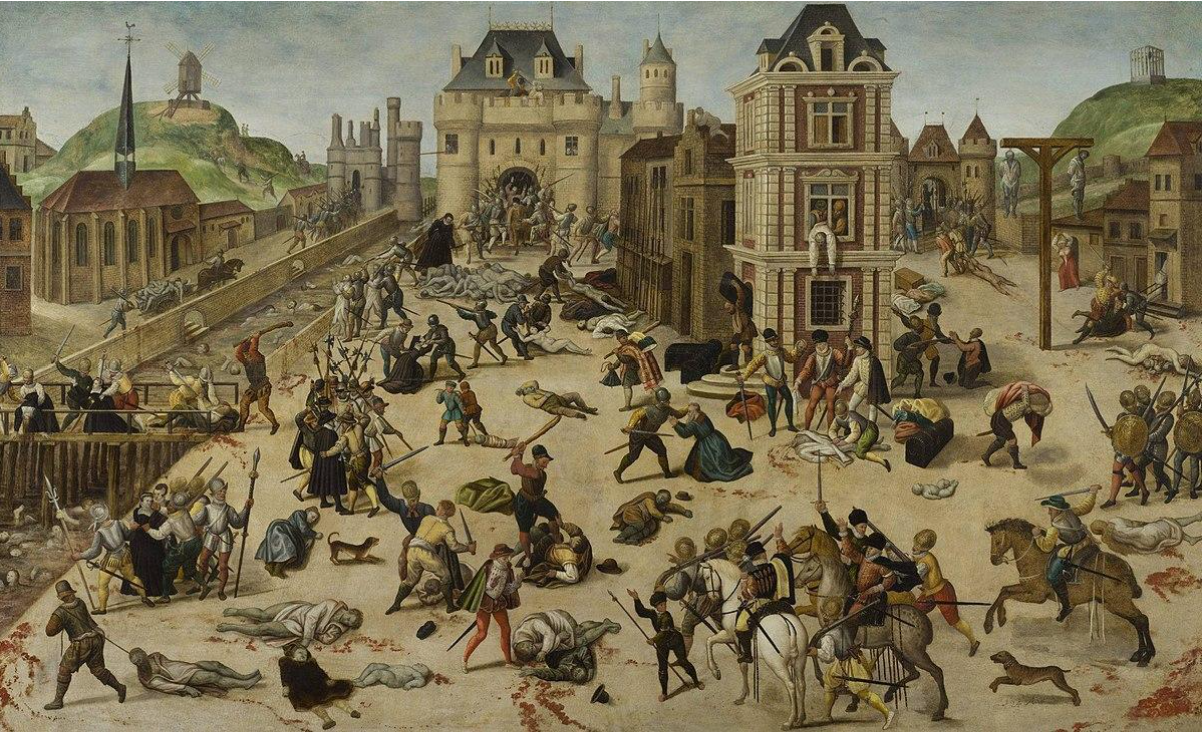
In 1598, by the time the king of France—Henri IV ended the war between Protestants and Roman Catholics in France by embracing Roman Catholicism and the religious toleration of the Huguenots guaranteed by the Edict of Nantes, and many watchmakers were Huguenots. With the war ended, they all gathered at Burgundy-Franche-Comté which later became the true cradle of European watchmaking.
However, in 1685, with the revocation of the Edict of Nantes, Protestant worship was banned, temples were destroyed and many Protestant (including the Huguenots) were forced into exile. There was a massive emigration of French watchmakers to Switzerland, taking knowledge and manufacturing secrets along with them. The consequences were disastrous for France, which saw a host of talented craftsmen and teachers flee.
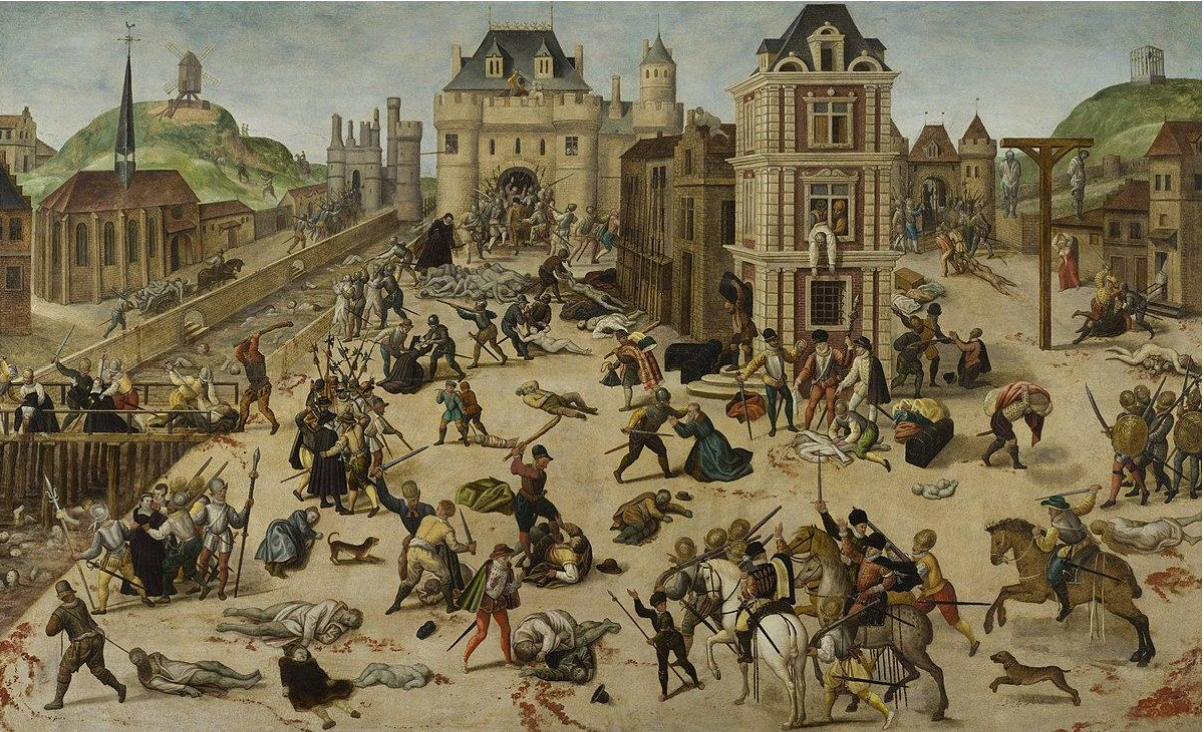 (The French Wars of Religion)
Before the revocation(Edict of Nantes),Geneva only had around 100 watch manufacturers and 300 watchmakers, with annual production of 5000 pocket watches. However, after the revocation,the number rose rapidly to 6000 watchmakers,with annual production of 50000.
At the same time, Geneva is specialized in enamel. With the combination of enamel and watches, not only did it help the Swiss with making aesthetic watches, but also resulted in higher performance, which made the Swiss more competitive in the watch industry.
In 1789, the French Revolution ended. With the decline of the aristocracy, the French economy collapsed. Many luxury watch manufacturers in France started to shut down one by one. On the other hand, Swiss watches based on low prices began to prevail. With orders soared from France, many watchmakers in Geneva decided to outsource the production of parts, and the contractors were the farmers coming from the Vallée de Joux.
Vallée de Joux, a 1000 meters tall mountain,most of the time is covered in snow, isolated from the world, away from dust, which became the perfect place for making watches. For instance, BREGUET, BLANCPAIN and PATEK operate their factories there.
The Construction of Switzerland
Many buildings in Switzerland are perfect for watchmakers to work, but why? To answer these questions, we must talk about a city—La Chaux-de-Fonds.
La Chaux-de-Fonds is one of the most famous watchmaking towns in Switzerland. It is located in a mountain with a height of 1000 meters near the French border, with a population of 39,000 people.This is the third largest city in the Swiss French-speaking circle. Although it can be regarded as a modern city in Switzerland, the transportation is still inconvenient due to its location inside the mountains.
To understand how La Chaux-de-Fonds became a watchmaking center and flourished in Switzerland,we must go back to the 17th century.
In the 17th century, La Chaux-de-Fonds was a well-known horse production place. Buyers from all places went there to purchase horses. One of them is Daniel Jean Richard, a blacksmith, but he was given an opportunity and able to help people repair pocket watches.
The pocket watches kept by businessmen were all made with the latest and most advanced technology at that time. The young Daniel quickly understood the mechanical structure of pocket watches, and soon he was able to make pocket watches by himself. This crafting technology gradually spread out in La Chaux-de-Fonds, and formed a specialized industry. After that, the town began to undertake outsourcing business from the Geneva watch factory, and the scale of the industry grew larger. By the middle of the 18th century, one-third of the population were engaged in watch-related industries.
However, in 1794, much of La Chaux-de-Fonds was destroyed in a fire.To rebuild their home, people at that time decided to redevelop the town and concentrate at watchmaking only.
Based on the slope facing south, the blocks were planned as a checkerboard distribution, with 3- and 4-storey buildings side by side, and courtyards must be set up in the southern side of the buildings; The watchmakers’ studios must also be placed in a position where the sun could shine on. To allow the interior of the building to receive sufficient sunlight during the winter solstice, it should not be built too high in order to resist the cold weather of the highlands. Large windows were also installed, those are also an architectural feature here. Such a construction of the watchmaking “city” being exclusive to the watchmakers has brought the watchmaking industry of La Chaux-de-Fonds back to life, and its development became better than ever.
After that, many cities in Switzerland used La Chaux-de-Fonds as a reference for new constructions such as the reconstruction of Geneva in 1871.
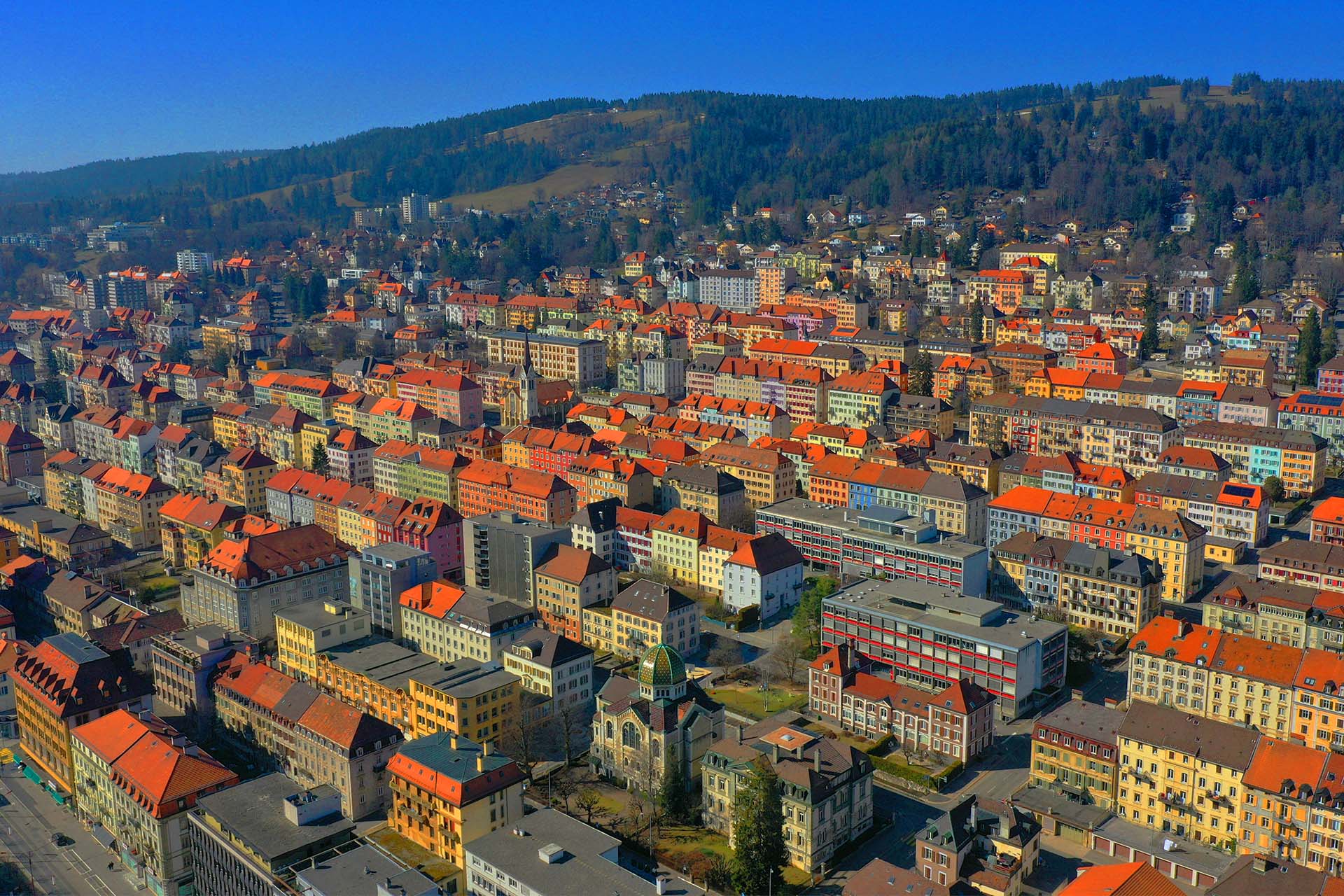 (Photo of La Chaux-de-Fonds)
The Napoleon War
After the third and fourth Coalition wars in 1807 with Napoleon victory, Napoleon announced the Continental System that totally shut out the UK from continental trade. This left the UK no choice but to increase their trades with other parts of the world like America.
At that time, the centre of watchmaking began to move from Great Britain to Switzerland. Sturdy watches made in England had dominated the industry until the late 18th century, with production of two hundred thousand watches per annum. However, with the Continental System,English watches had failed to keep up with constantly changing technology. As a result,they surrendered their commercial supremacy to the new styles and methods that were pioneered in Europe.
The adopti on carried out by Continental watchmakers, Jean-Antoine Lépine innovative caliber, enabled European watchmakers to produce increasingly slim watches, and the beginning of the industrialization of the production of basic components in Switzerland by the likes of Frédéric Japy,and later Antoine LeCoultre, meant that watches could be made with increasing precision.
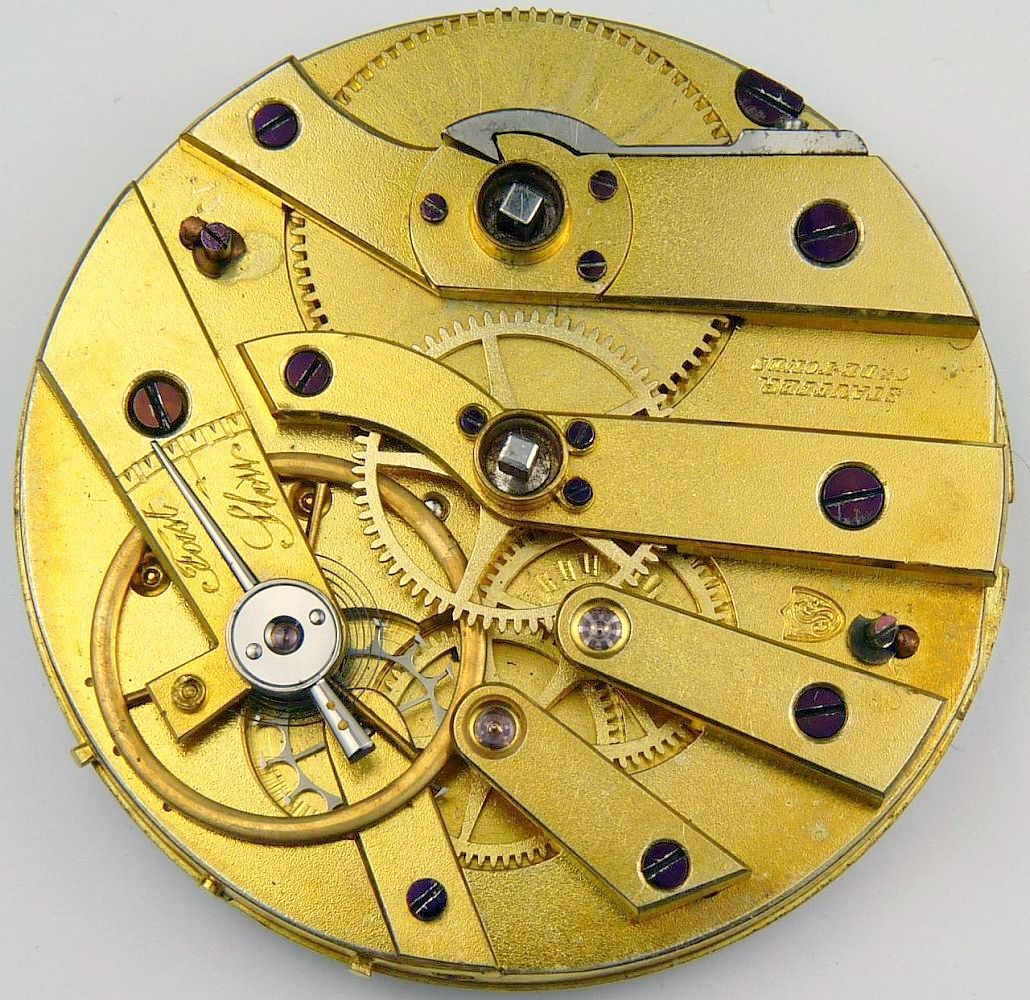 (Jean-Antoine Lépine innovative caliber,an innovation that revolutionized watchmaking. Photo from vintagewatchstraps)
At the time,people in Switzerland started to hop into the watch industry.In the middle of the 18th century, five thousand of the city’s twenty-five thousand inhabitants worked in the watch trade. By the early years of the 19th century, almost half of Geneva’s citizens worked in watchmaking industry, and annual production had increased from around 5,000 to 100,000.
During this period, watchmaking in Geneva began to take shape as a systematic and codified set of craft skills within a structure known as the “Fabrique.” This term described both a way of working and a physical location. At the top of this structure was the établisseur, who organized the production chain starting with baseplates sourced from the Jura. He supervised the assembly of components in Genevois cabinets—light-filled workshops on the top floors of buildings. Here, master watchmakers, or cabinotiers, worked at benches free from shadows cast by neighboring buildings and uninterrupted by noise from the streets below.
The Great Exhibition
In 1851, it was the time for Switzerland to shine and show their watches to the world.
The Great Exhibition, one of the defining events of the nineteenth century. It was hosted to present the works of industry of all Nations of 1851. Conceived by His Royal Highness, Prince Albert, Queen Victoria’s husband,the Great Exhibition demonstrated his apparently limitless appetite for technological and moral improvement.
The official descriptive and illustrated catalogue of the event lists exhibitors not only from throughout Britain but also from its “Colonies and Dependencies’ and 44 “Foreign States”. Numbering 13,000 in total, the exhibits included a Jacquard loom, an envelope machine, kitchen appliances, steel-making displays and a reaping machine that was sent from the United States.
Nevertheless, watchmakers’ works were presented at the Great Exhibition. The Swiss national area in the south transept of the glass and iron cathedral of commerce bristled with a pleasingly heterogeneous group of exhibits that included everything from a “wooden leg, used either for amputation above or below the knee; with girdle and straps,” to a lady’s ”mechanical writing desk carved with scenes representing the rustic economy and alpine life of the inhabitants of Switzerland.”
At the Swiss section,the display was nothing if not comprehensive, including plain watches,repeaters, self-acting clockwork watches, tact watches (intended for the blind), watches equipped with independent seconds hands and date hands, also those with insulated sea-compasses, spy-glasses, secret compartments, and extra plates, likewise, watches called “à triple effet,’ capable of being transformed into three different shapes. The smallest watch ever constructed, the diameter of its works being no more than three and three-quarter lines, about three-tenths of an English inch.
Patek also sold his watches at the end of the exhibition,it was about the size of a child’s fingernail and decorated with a tiny enamel painting of a wild rose, was bought by the renowned London firm Dent for the remarkable sum of £150(which is £19,710 in today) .” This, surely, was evidence of how the once dominant British watch trade was being eclipsed by the Swiss manufacturers.
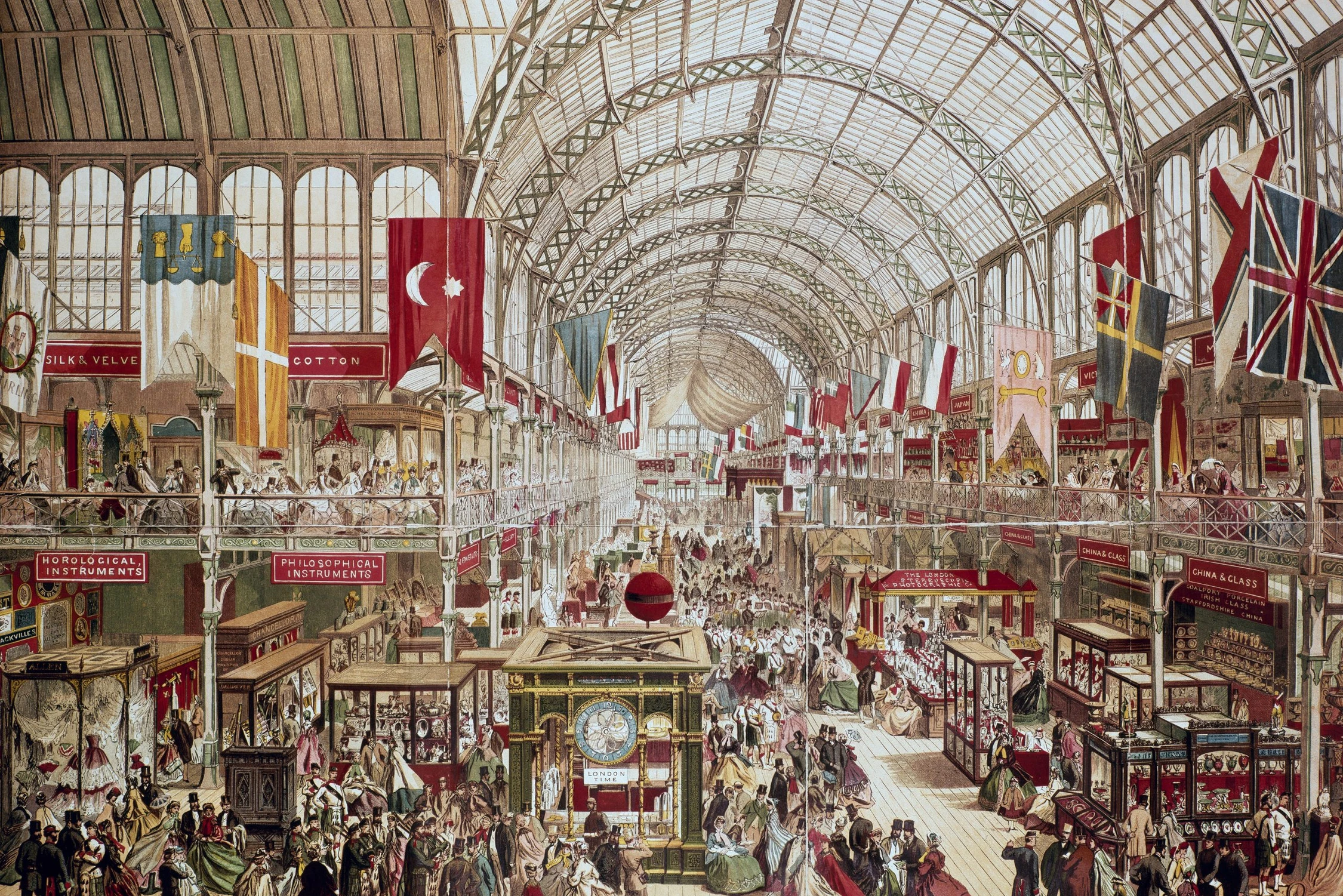 (The Great Exhibition in 1951)
In August 1951, both H.M. Queen Victoria and H.R.H. Prince Albert purchased a Patek Philippe during the visit to the Exhibition. The Queen selected a dainty blue enamel watch, No. 4719, with floral engraving, while her husband chose a suitably masculine, heavy, gold, hunter-cased chronometer with a repeater mechanism, watch No. 3218, which benefited from the firm’s much-lauded stem-winding system.
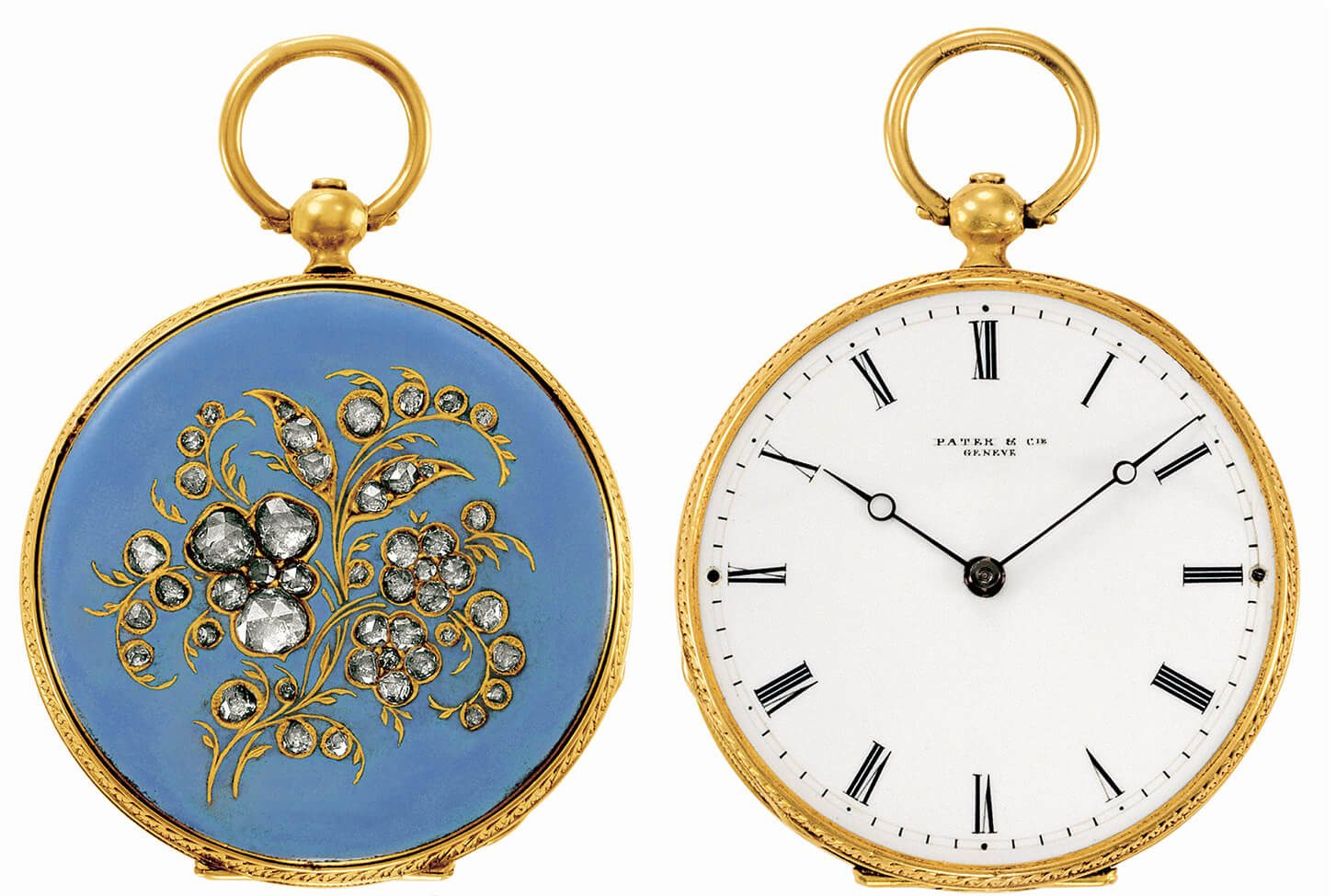
The pendant watch,No.4719, purchased from Patek Philippe by Queen Victoria.The caseback features a flower bouquet set with rose-cut diamonds on a sky-blue enamel background. (Photo from the Patek Philippe The Authorized Biography)
Challenges From America
America was a huge country and news of the spectacular gold found that led to the Great California Gold Rush of 1849, which had filtered back to the Old World. As a result, in the early 1850s, agents from Swiss watch companies went to the major port cities of America’s eastern seaboard.
However, at the same time, America was fully industrialised.As Patek once written “I visited the new watch factory in Waltham, a large building was erected, everything there is steam operated with twelve horsepower, I saw stone holes thus set, in this same manner they turn the tiniest pivots, etc.” Patek was fascinated by what he saw at Waltham, where parts were made with such precision that they were entirely interchangeable, with production of 100,000 annually. Indeed, he was witnessing the birth of the American mass-production of timepieces, which within a couple of decades, would provoke another crisis of watchmaking in Switzerland.
To combat this, Geneva’s watchmaking industry had various measures instituted to protect and strengthen the position of Swiss manufacturers regarding the American competition. One of the most important “weapons” in this fightback was the Observatory rate trial.
Chronometer testing by observatories had begun out of necessity in the eighteenth century Greenwich Observatory, England. A system was devised that would replace lengthy sea trials of the timepieces that were much necessary for precise navigation. Using standardized mathematical procedures and placing the timepiece in a variety of positions, a reliable result could be achieved without the chronometer needing to be left in a dry environment. It was only when the threat from America began to be taken seriously that the cantonal authorities created some form of external technical validation that would be a useful marketing tool. In 1873, the Geneva Observatory began hosting precision competitions.
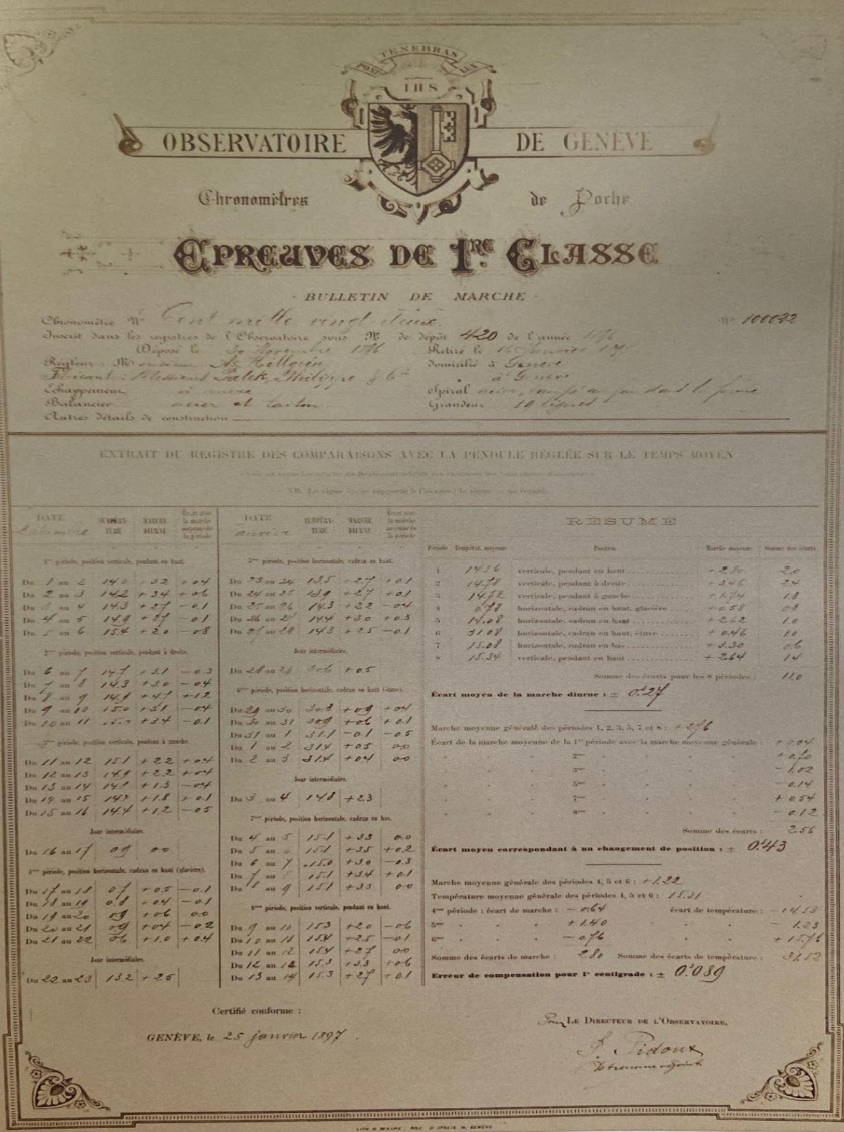 (Above is a first-class rating certificate awarded by the Geneva Observatory in 1896. Photo from the Patek Philippe The Authorized Biography)
The Geneva Seal was (and still is) used as the seal of authenticity for any Geneva-made watch. Any watch which carries it has had the movement made by a Genevoise craftsman in the Canton of Geneva.
This wasn’t the only anti-counterfeiting measure which was put into place at the end of the 19th Century. The well known seal of quality “Swiss Made” started to appear around 1880 – although it had no legal status at this point.
With new seals of quality in effect, the quality Swiss watchmakers were ready to stand out from the crowd.
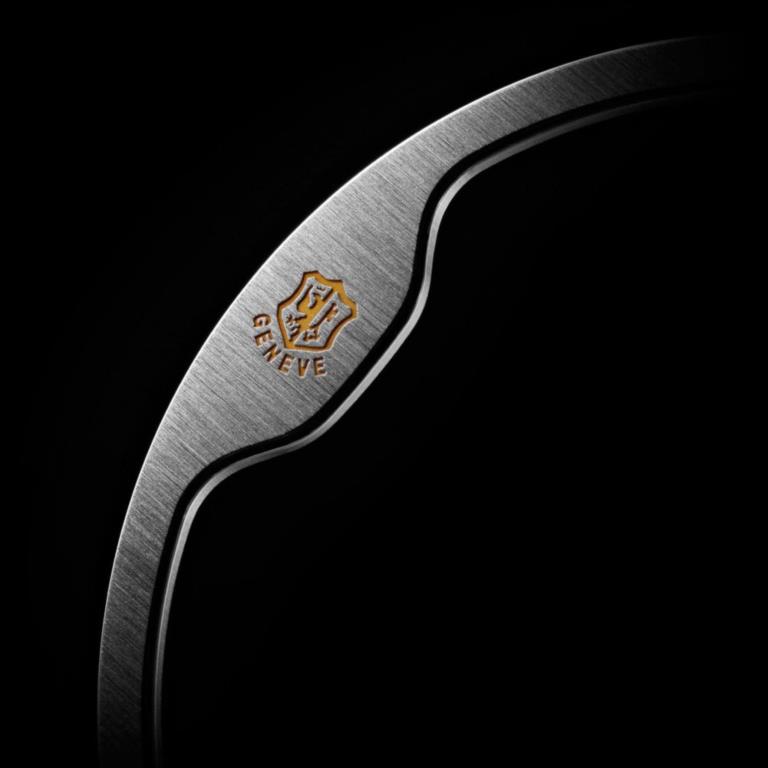 (The Geneva Seal)
World War One
The First World War, from 1914 -1918, is undoubtedly one of the most influential military conflicts in shaping the modern world, and the world of horology.
Switzerland maintained its neutrality in World War I, but the conflict not only engendered heavy tensions between the Germanophone Swiss and their French- and Italian-speaking countrymen—the result of each group’s cultural identification with the combatants—but also cast a weighty burden on the working class. As part of the militia army, they were mobilized for long periods to guard Switzerland’s borders, but they received no compensation for their loss of wages. Moreover, the working class was also hurt by the government’s decision to finance defense efforts through the issue of currency, which caused a surge in inflation. Some Swiss did profit from the war, as the country’s persistent balance-of-payments deficit was reversed for the first time. One of them is watchmaking industries furnished goods to both belligerent camps, while farmers benefited from increasing demand and prices.
At the time Switzerland did supply watches to the axis and allies countries,but mostly are watch part,because many soldiers in the front line prefer their own country’s product instead of outsiders.Therefore watch parts will be made and delivered to the countries (axis and allies) .After that they will assemble the watches by themselves and distribute to the front line.
Little fun fact,the concept of skeleton and openwork watches were started during ww1 as watchmakers are forced to join the conflict.They will disassemble their watch in order to have parts to repair guns and gears for survival as the life in trench always lack of supplies and awful as well.
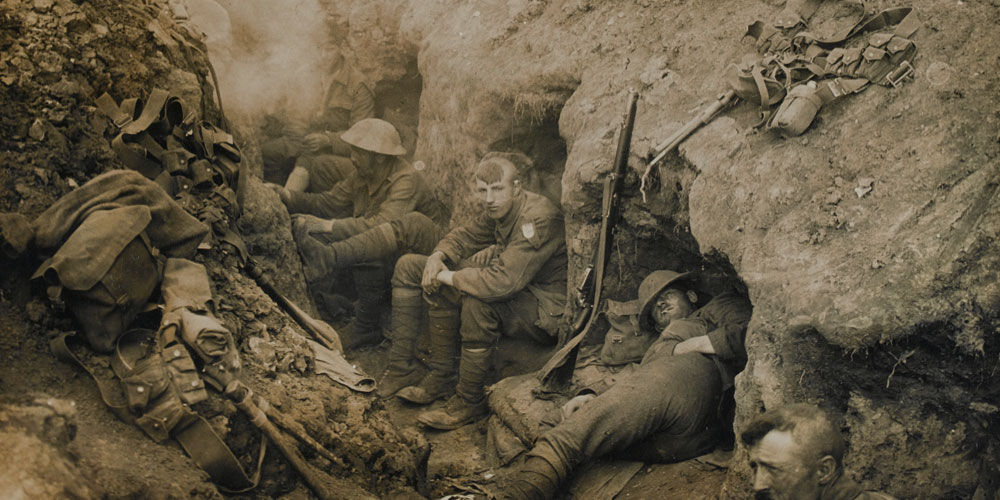 (Life in trench)
World War Two
Again,Switzerland remains it neutrality in World War Two even after the fall of French in 1940.This help the Swiss watch industry be more stable.
There are lot of reason why German did not invade Switzerland. One of the reasons is because Switzerland was considered as part of the German. Swiss companies produced weapons for German forces. Although neutral and independent, the Swiss supplied 10 times more weapons ,military technology and watches to the Axis than to the Allies. British once planned to bomb Switzerland, fortunate it did not happened.
Switzerland is also the bank of German.As Swiss sociologist and political scientist-Jean Ziegler once said “Hitler was crazy,but not crazy enough to attack his own banker”
Because of these reasons Switzerland remains it neutrality in the war and established a stable place for watchmakers to continue their work in the watch industry.
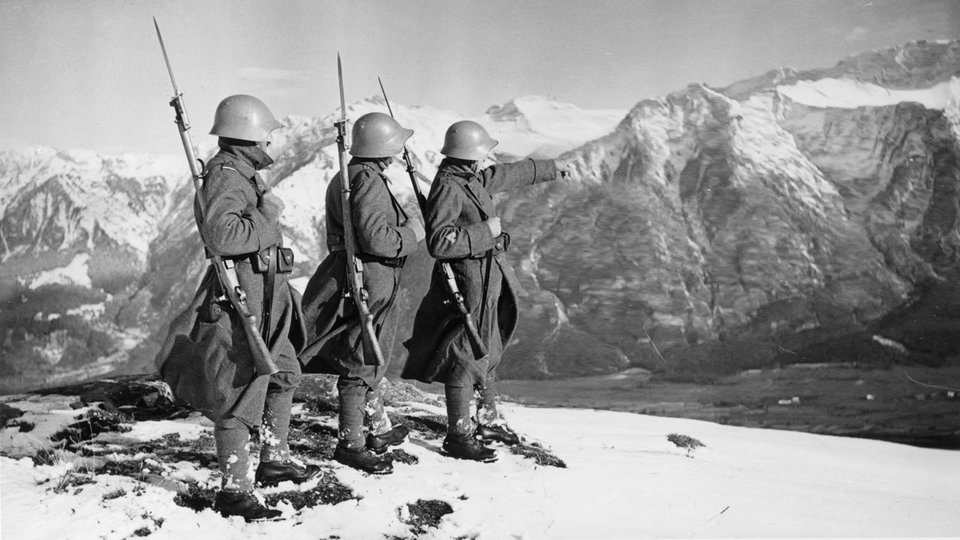 (At the time there are 430,000 soldiers in Switzerland)
Cold War
Swiss watches were in high demand following World War 2. As the Swiss had a policy of neutrality during the war, the manufacturing industry in Switzerland had not been forced to produce items to support any war effort. Which had been the case in their main competitors – Japan and the United States.
When the war was over, the American watchmakers needed the time to move back to watch production.
German are under the Soviet and Allies occupation.At the time,most of the German watch brand are under the Soviet control like Lange & Söhne and Glashütte Original until the dissolution of the Soviet Union in1991.
Japan is also busy at the reconstruction after allies bombing and two nuclear bomb dropped on Hiroshima and Nagasaki.
In the absence of any real competition, Swiss manufacturers took complete control of the watch market. By the end of the 1960’s, Swiss manufacturers had 50% of the watch market worldwide.
Due to the tensions of the Cold War, Switzerland took extreme measures to ensure its safety. During this period, Switzerland built approximately 360,000 to 370,000 bunkers, creating enough capacity to house 100% of its population. This extensive network of bunkers made Switzerland one of the safest countries to stay in the event of a nuclear war.

The Quartz Crisis
1969 was a important year for the watch industry, Zenith introduced the El Primero, the first automatic chronograph caliber in the world. It beats at an astonishing, ultra-high frequency of 36,000 vibrations per hour, much higher than the standard rate, providing unrivaled precision. Tag Heuer also released one of iconic watch at the time-Tag Heuer Monaco. Omega Speedmaster Professional Moonwatch were along with Neil Armstrong and Buzz Aldrin on the Moon.But the most important is the release of Seiko Quartz Astron that forever changed the watch industry
At the time,the most precise mechanical watch is -2/+2 second per day.However,the Seiko Quartz Astron is -5/+5 second per month!
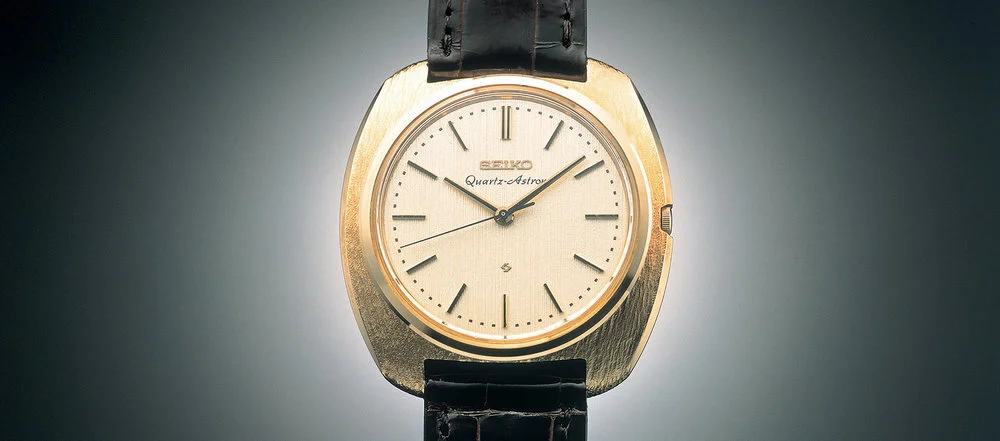
(Seiko Quartz Astron)
In fact in 1973,the total production of Swiss watches is 84.3 million. On the other hand, Japan have only 28 million. However with the marketing, strategy and high performance of Seiko, in 1979, for the first time in history, Japan watch total production is finally beyond the Swiss.
It was a disaster for the Swiss, many factory and brand are forced to close down. Before 1969.there have 150,000 watchmakers in Switzerland, but after the Seiko release, there only have less than 30,000 watchmakers. This left many watchmakers no choice but to put down their tools, picked up the ladders and turned their careers to be construction workers.
In addition, due to the increase value of Swiss franc at the time. Affected by the exchange rate difference, many watches are more expensive than ever. Therefore people turned their eye to the cheap, affordable quartz watch.
However,there are still some watch brand stick to mechanical insteal obey to the quartz.Which helped the Swiss mechanical watch to reborn after the quartz crisis.
Fun Fact, during the quartz crisis period, many electronic movement are supply by Hong Kong. In 1974, Hong Kong watch factories successfully produced LED electronic watch, reflecting the maturity of Hong Kong’s manufacturing capabilities and marking the region as the world’s largest producer of watches. By 1979, Hong Kong’s watch exports reached 73.39 million units, with 70% being electronic watches. Becoming the biggest watch movement supplier, followed by Swiss “I once produced 10,000 electronic watches a day at my own factory,” said Mr. Leung Wai Ho, Managing Director of Dailywin Watch Products .
The Reborn of Switzerland
There are many amazing stories of how the Swiss watch industry survived the quartz crisis, such as the foundation of the Swatch Group by Nicolas G. Hayek and many more. These topics certainly deserve articles of their own. However, there aren’t as many theories about how Swiss mechanical watches became mainstream again after the quartz crisis.
Brands like Swatch brought Swiss watches back to the mainstream, but it was the inherent “soul” of mechanical movements that brought collectors back to high-end horology. As the famous Patek Philippe slogan suggests—”You never actually own a Patek Philippe. You merely look after it for the next generation”—the industry pivoted. They stopped trying to compete with the accuracy of quartz and started selling longevity, craftsmanship, and legacy.
This shift transformed watches from simple tools into collectible art. By 1988, when the Ulysse Nardin Astrolabium Galileo Galilei graced the cover of Guinness World Records, the message was clear: the mechanical watch wasn’t just surviving—it had become a symbol of human achievement.


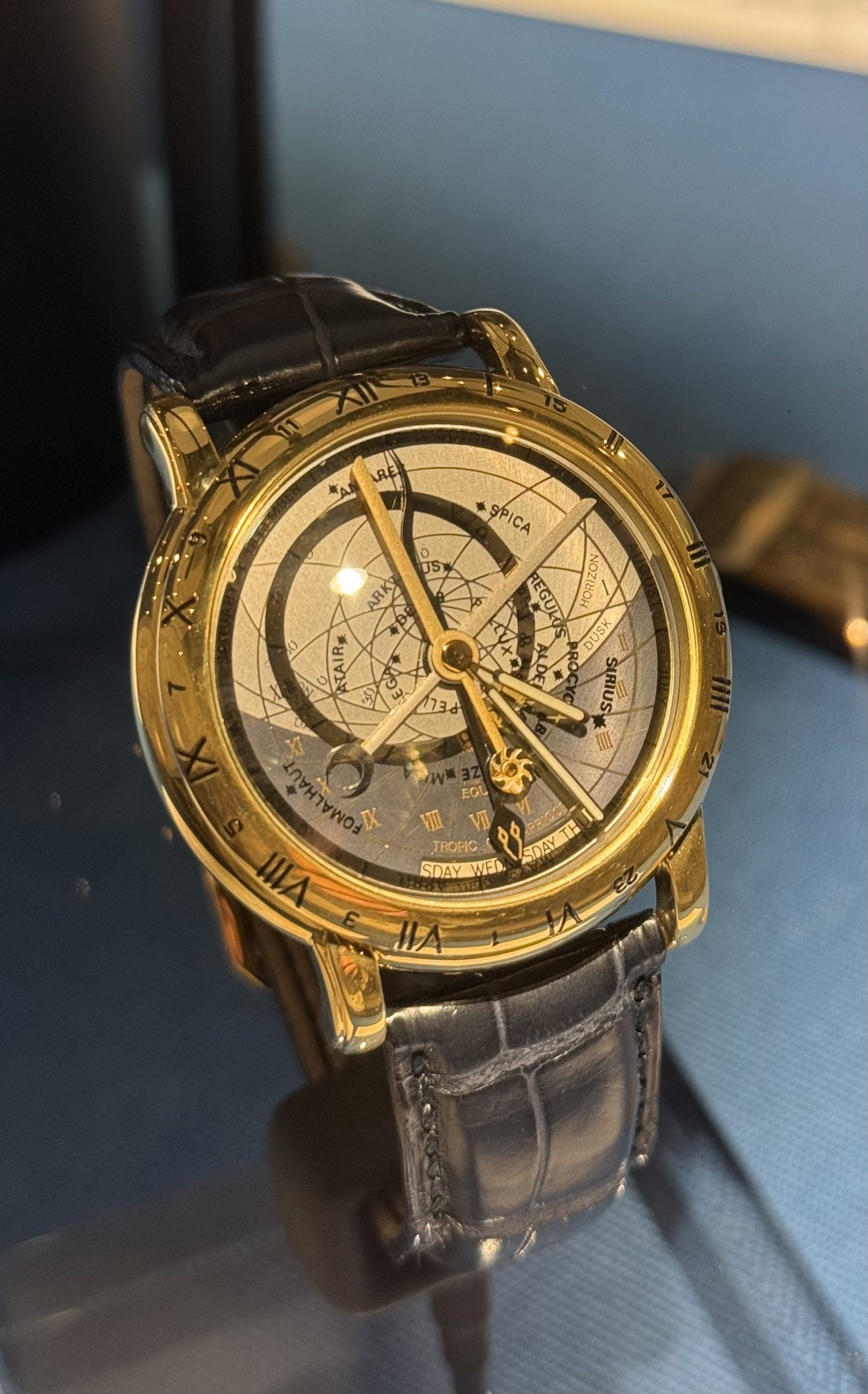 (Photo of Ulysse Nardin Astrolabium Galilieo Galiliei taken in Musée International d’Horlogerie)
With the ease of the quartz crisis, people start to appreciate the craftsmanship of mechanical again.The Swiss slowly recover and keep create beautiful watch pieces after the crisis,which again establish their position in the watch industry.
Thought
The more i dive into the history,the more i find,they just never end.I started my research of horology history back in 2021 when i was 17.I created some YouTube video to share my research of horology history like “A Brief History of Watch Moonphase”. This blog is not fully complete as there are still many history and interesting story need to be unfold.I will keep my research and update if i found anything new. I will also share my research of “How People Read Time In The Past” very soon.