
Watch Facts
Quiz: 2025.10.24 Quiz (For Old time sake)

18k gold case 38x45mm. This watch was Andy Warhol’s Collection. Beta 21 quartz movement. The Beta 21 quartz movement is an electronic movement used in wristwatches. Developed in the late 1960s by the Swiss consortium CEH, it features a high-frequency quartz crystal oscillator (8192 Hz) for enhanced accuracy. While it had a limited production run, the Beta 21 movement played a crucial role in the advancement of quartz watch technology, marking the start of the industry’s quartz revolution.
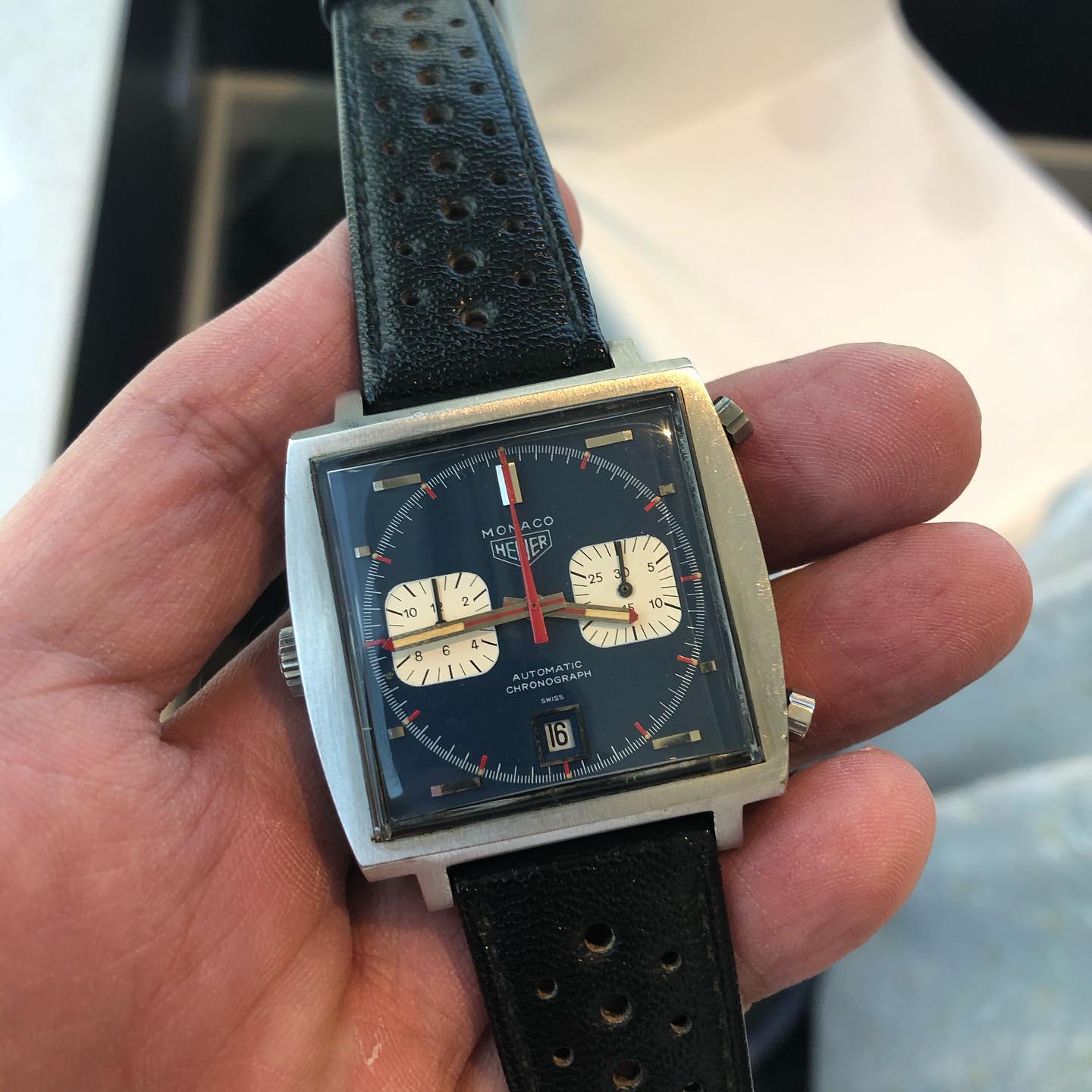
- Worn by Steve McQueen in the racing film, Le Mans.
- In 1971, Steven McQueen starred in the racing “documentary styled” movie Le Mans; directed by Lee Katzin.
- This is before the trend of brand using movies to build their presences; and the production team went out to purchase these watches at retail price.
- McQueen took one Monaco and gave it to his chief mechanic; thanking him for keeping him alive for the past few months.
- At first, Haig Alltounian didn’t want the watch but McQueen told him he had already done the engraving on the case back, he couldn’t give it to someone else.
- The Monaco watch was first introduced in 1969, bearing a few significant details, first and foremost is the case shape, being square isn’t the easiest to make it water resistant; but they’ve managed to get the Monaco to withstand water to 100m.
- 39mm stainless steel case.
- The movement was the legendary cal 11. In 1967 a group of companies; Breitilng, Hamilton-Buren, Heuer, and Dubois-Depraz— joint effort to develop a new automatic chronograph movement.
- In 1969, they unveiled the Cal. 11. The Heuer Caliber 11 was the company’s first and arguably most famous automatic chronograph movement.
- This watch is up for auction on December 12th at Phillips auction (New York).
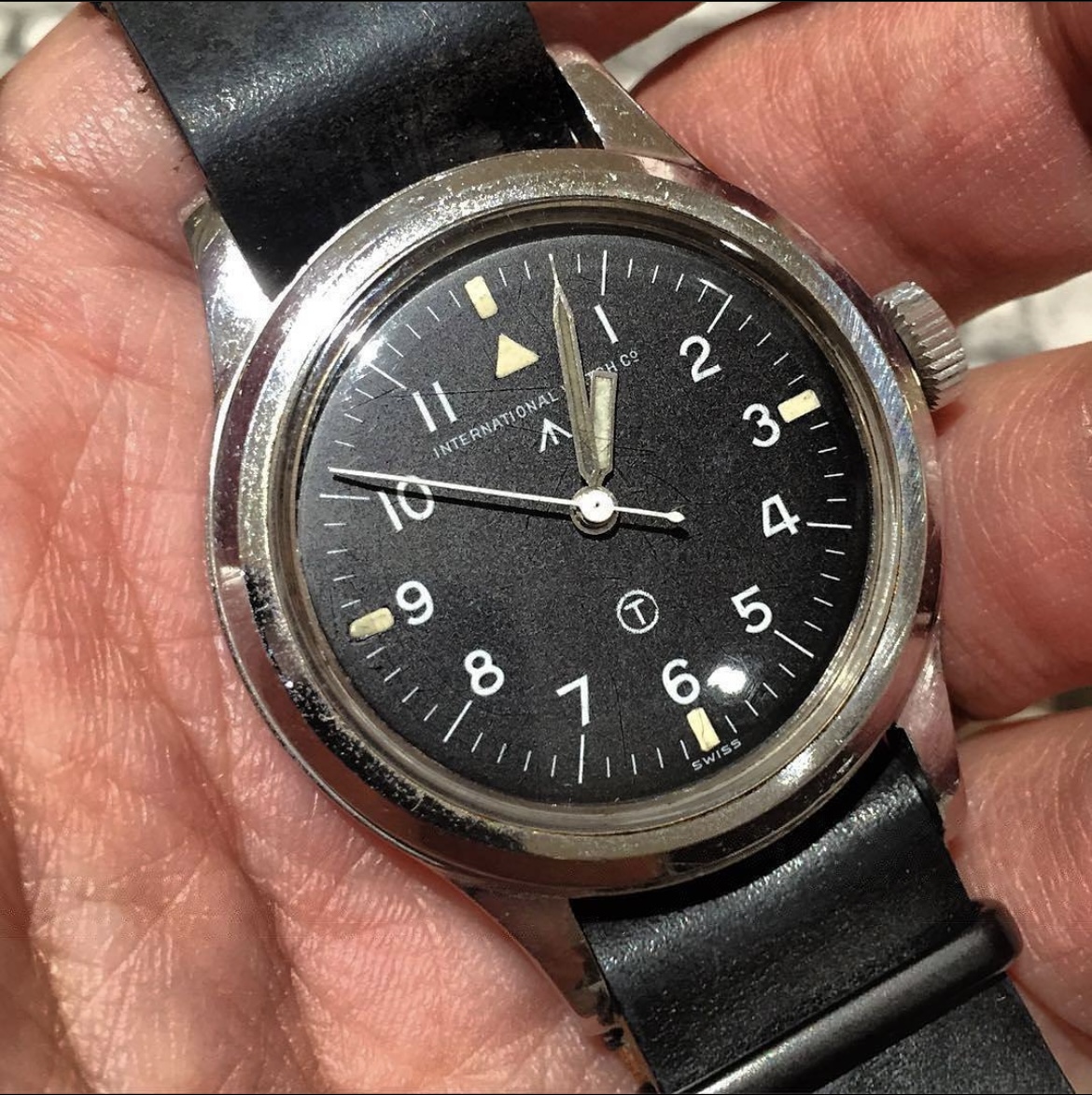
IWC Mark XI Military British Royal air force circe 1950s. Stainless steel case in 36mm. Fixed lugs, antimagnetic cover tap. Manual winding Caliber 89. Sweeping centre seconds, arabic numerals and circled T (tritium).
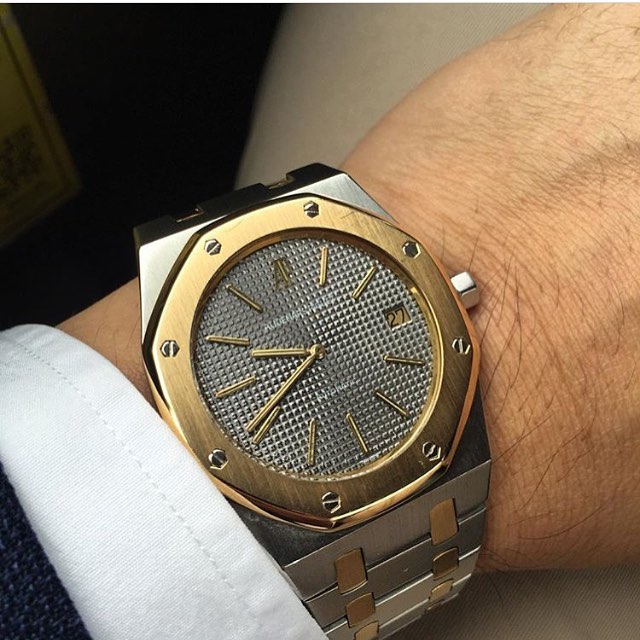
was first launched in 1972, it immediately captured the attention of all watch lovers in the world. There are 2 important aspect to this watch. Firstly for its truly original styling, the work of Gérald Genta, the incomparable designer who imagined its octagonal bezel, held in place by eight visible screws, and its integrated bracelet. Secondly, because the Royal Oak was the first high-end sports watch. It went against the trend and made this watch in steel, a metal that would go on to win new respect. The brand gave its Royal Oak a self-winding movement with calendar function. It took its innovative shape from a porthole on HMS Royal Oak, the ship that would also give it its name. The brand’s wider interest in trees came later. In the photo, features a very early 2nd generation Royal Oak in two tone 18K and Stainless steel
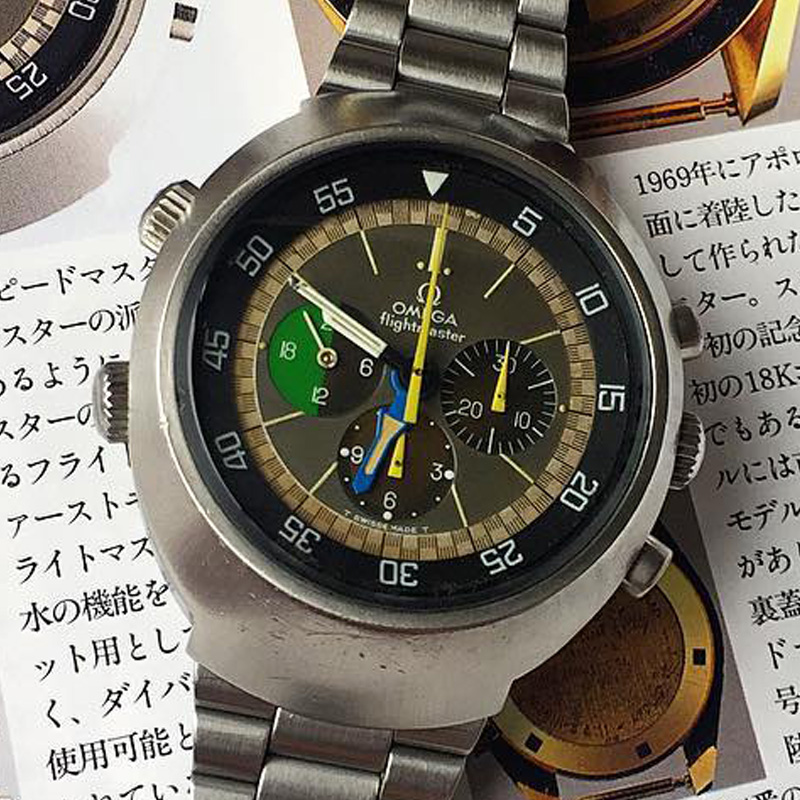
The Omega Flightmaster, a variant from the Speedmaster line. Introduced in 1969, the Flightmaster features the most comprehensive functions with dual TimeZone, chronograph, day and night, etc. The version shown here is the Cal.910 which has the day & night indication whereas the later Cal.911 has the sub seconds indication. Manual winding chronograph in stainless steel.
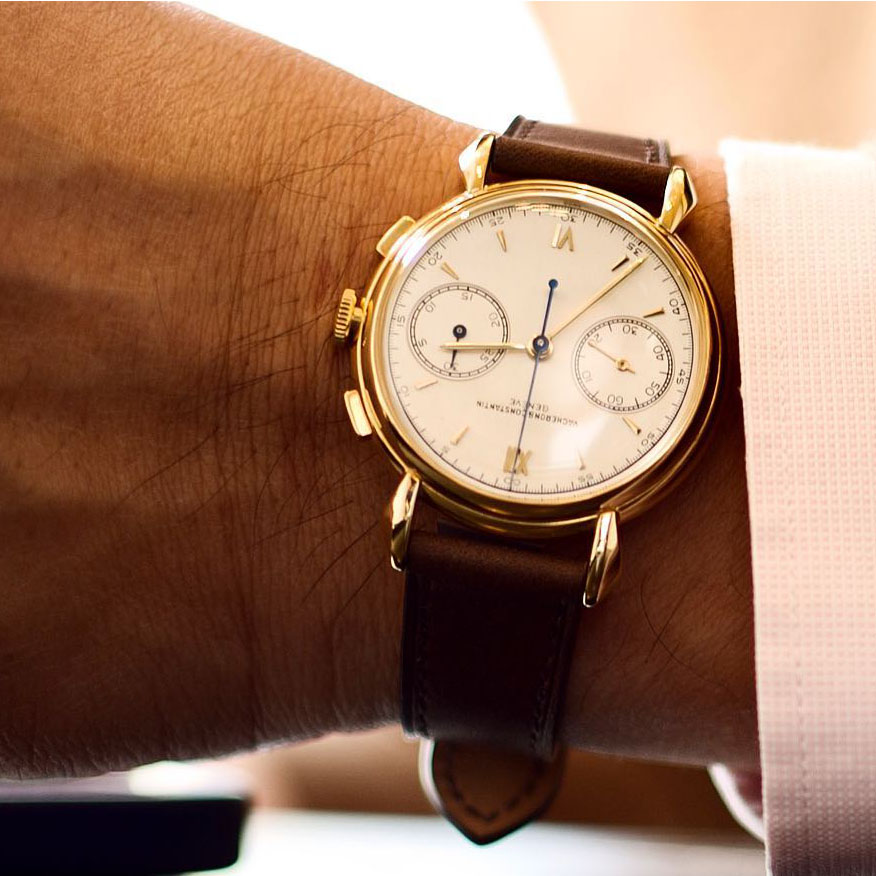
- Vacheron Constantin brings us the Maison’s heritage pieces.
- Chosen with patience and talent by the Masion’s heritage department specialist, vintage watches covering the entire 20th century are now part of the “Les Collectionneurs” collection.
- These pieces are carefully restored by the maison and comes with a certificate of authenticity, and a 2 year guarantee.
- 36 mm case in 18k pink gold with tear drop lugs.
- Manual winding movement cal 492, 30-minute counter chronograph wristwatch.
- 30-minute counter at 3 o’clock, small seconds at 9 o’clock, applied indexes.
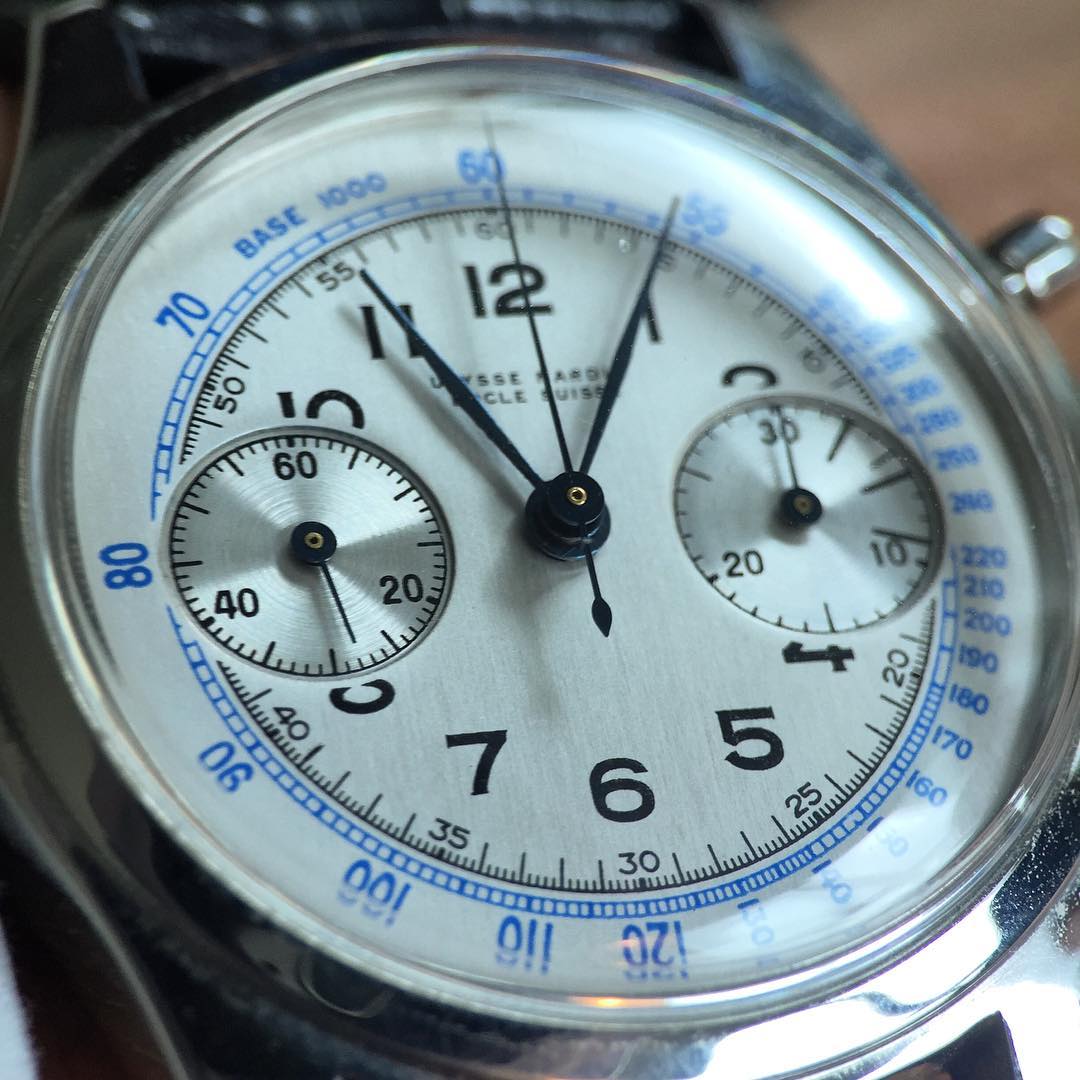
A vintage Ulysses Nardin chronograph from the 1950s, this piece is unrestored, completely original in amazing condition. The large stainless steel 38mm high-pressure snap-back waterproof case, manual winding movement is Valjoux 22-based.
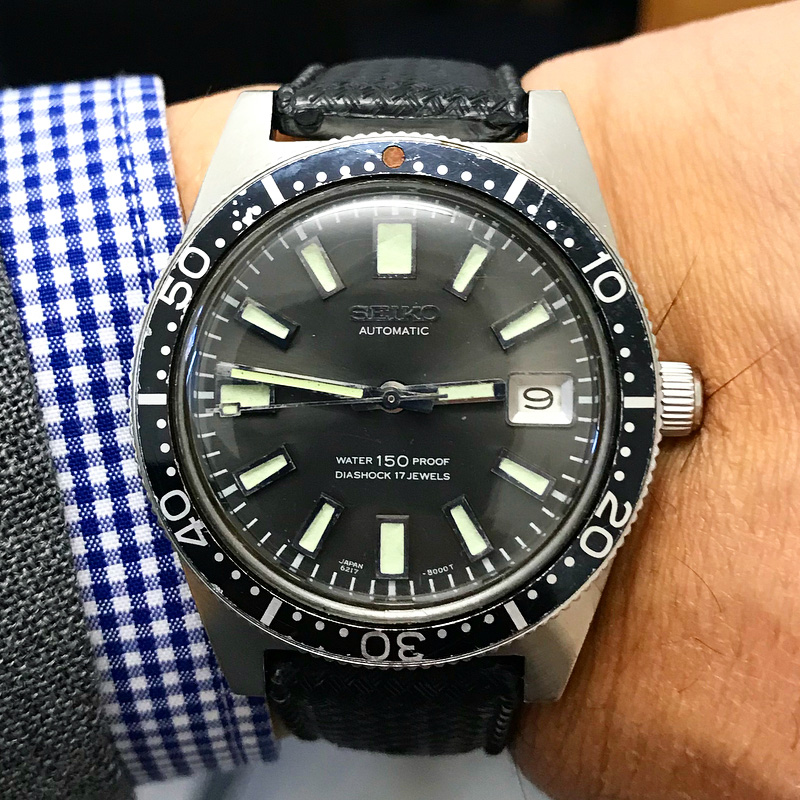
This was Japan’s first diver’s watch. It was an automatic 150m Diver’s. The launch of this model marked the start of Seiko’s pursuit for ever greater reliability and safety. In 1966, the watch proved its reliability and precision on the 8th Japanese Antarctic Research Expedition. The 6217-8000/1, which is better known as the Seiko 62MAS (autoMAtic Selfdater)Stainless steel case at 37mm. It featured a date function, a bi-directional bezel, stronger luminosity on the hands and indexes, and a big crown. It has a screw down case back but non-screw down crown. The Seiko 62MAS was rated to 150M of water resistance. While this doesn’t seem like a lot by today’s standard, it was Seiko’s deepest rating at the time (prior watch was rated only to 50M). The 6217-8000/1 caliber is a 18,000bph automatic, non hacking seconds with quick set date.
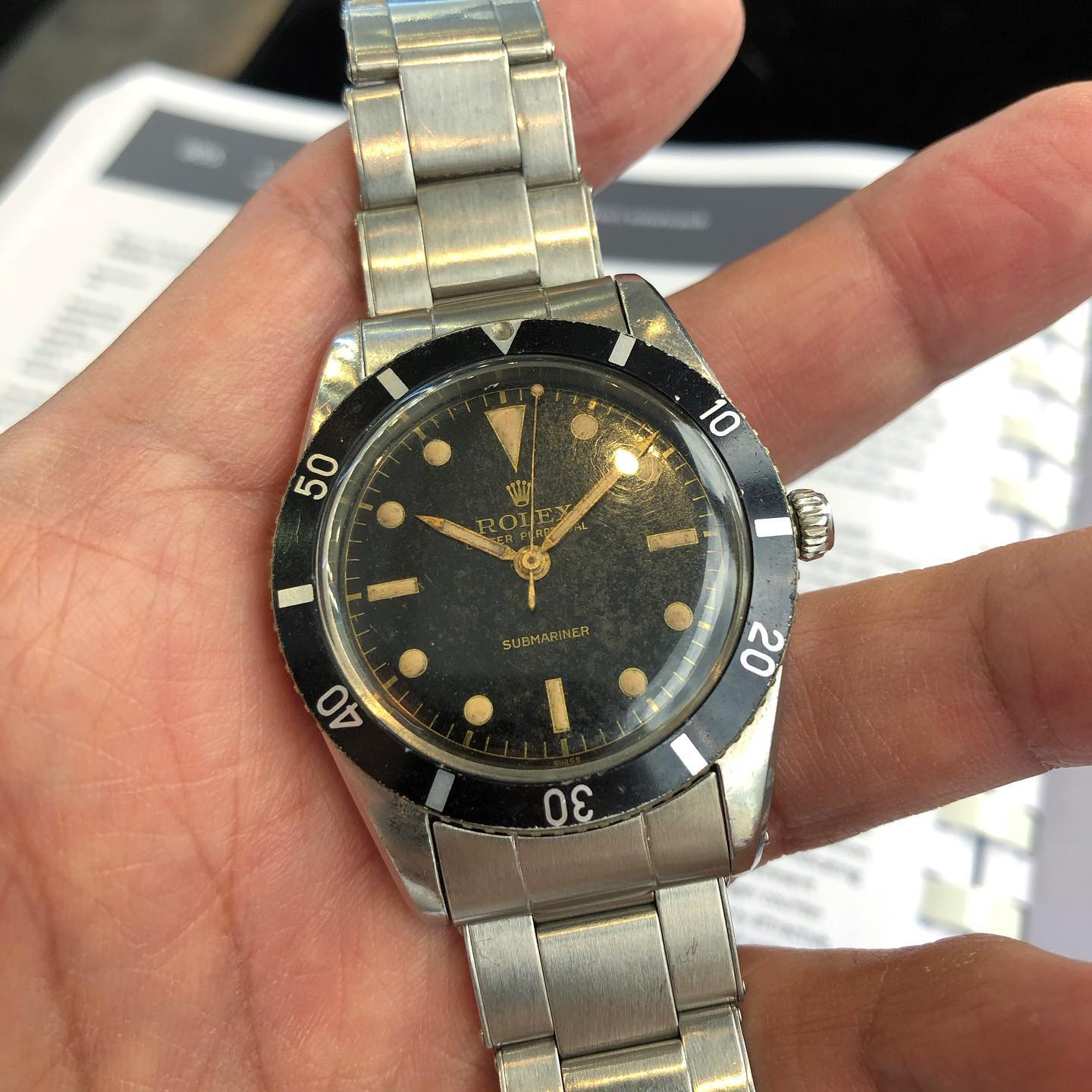
Stainless steel case in 37mm. Automatic Cal. A260. The first Submariner was introduced in 1953 which had a water resistance capabilities of up to 100 meters, making this a very early example. This watch is available at Phillips Auction on 10th July 2020 in Hong Kong. Estimate : 100,000 to 200,000 USD
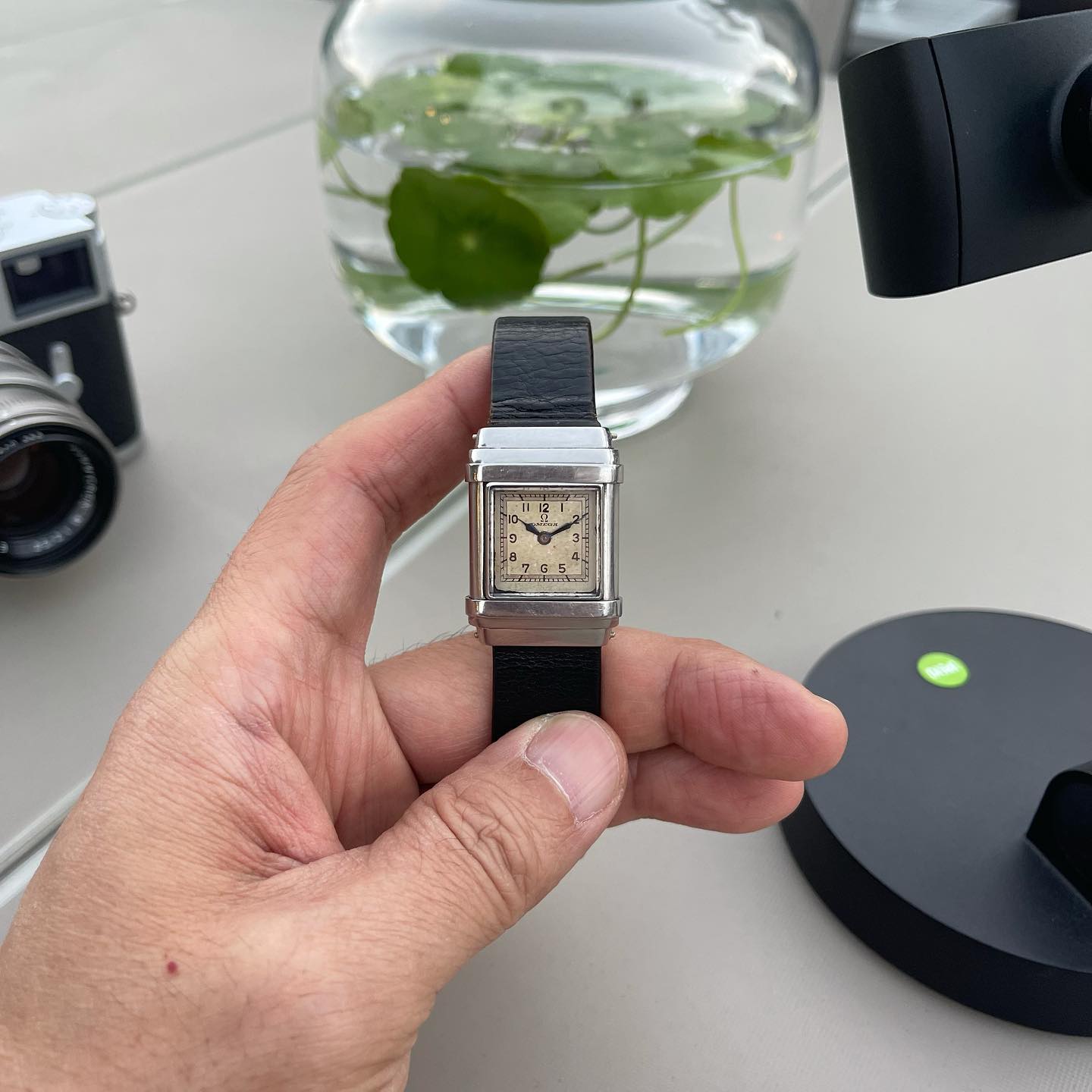
In 1932 Omega introduced a waterproof wristwatch called the Omega Marine reference number 679. The Omega Marine was the first dive watch commercially available to civilians, the first watch specifically tested and qualified for diving. The watch movement, dial, and hands were encased in a rectangular section interior case. This interior case had a shoulder at the end with a groove which contained a cork gasket. The interior case slide into a rectangular outer case, the end of which contacted the gasket in the shoulder of the interior case, creating a water tight seal. A spring clip on the back of the outer case held the two parts together. The clip provide the initial seal between the inner case, the gasket, the outer case, and as the watch submerges, the air pressure inside the case remain constant while the water pressure outside the watch increased, compressing the two parts of the case even more firmly, increasing the water tightness. The Marine was at first fitted with the manual winding calibre 19.4 T1, but later with the improved 19.4 T2, created in 1935. It is interesting to note that outer case had a sapphire Crystal. Sapphire was used because it was much stronger than glass and this was probably one of the very first use of sapphire on a watch. The watch strap was made of seal skin, but more interestingly it had a folding buckle.