
Watch Facts
Quiz: 2024.12.03 Quiz (Vintage)
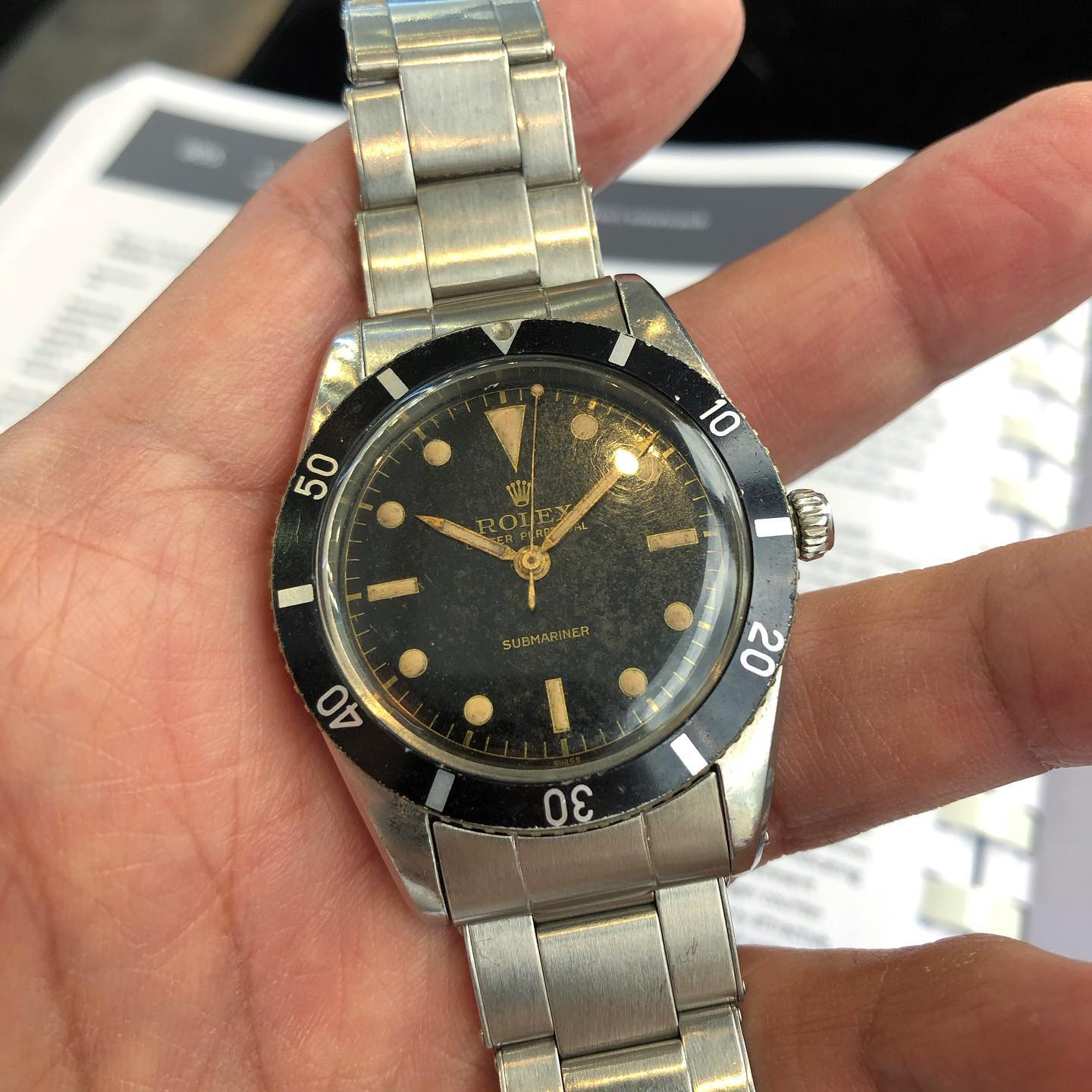
Stainless steel case in 37mm. Automatic Cal. A260. The first Submariner was introduced in 1953 which had a water resistance capabilities of up to 100 meters, making this a very early example. This watch is available at Phillips Auction on 10th July 2020 in Hong Kong. Estimate : 100,000 to 200,000 USD
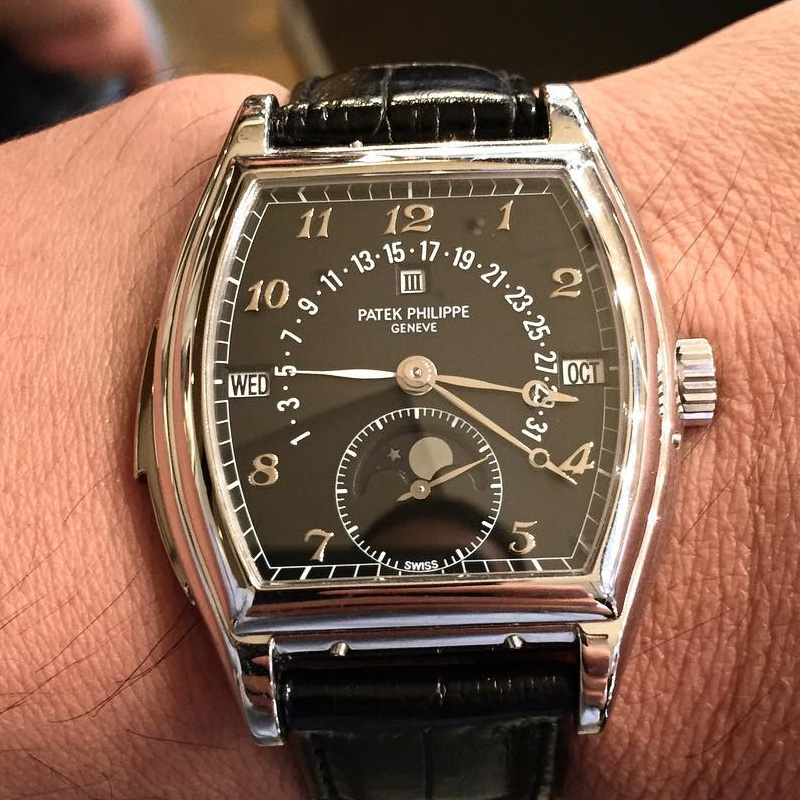
This minute repeater with retrograde date, perpetual calendar. 5013 started in 1992, caliber R29PS-QR an automatic movement with 515 parts. In 2011, the 5013 production was ceased. Cal. R. 27 PS, circular automatic nickel lever movement stamped with the seal of Geneva, 41 jewels, 22k gold micro-rotor, minute repeating on two gongs. Applied Breguet numerals, apertures for day, leap year indication and month, fan-form aperture for moon-phases combined with subsidiary seconds, retrograde sector for date
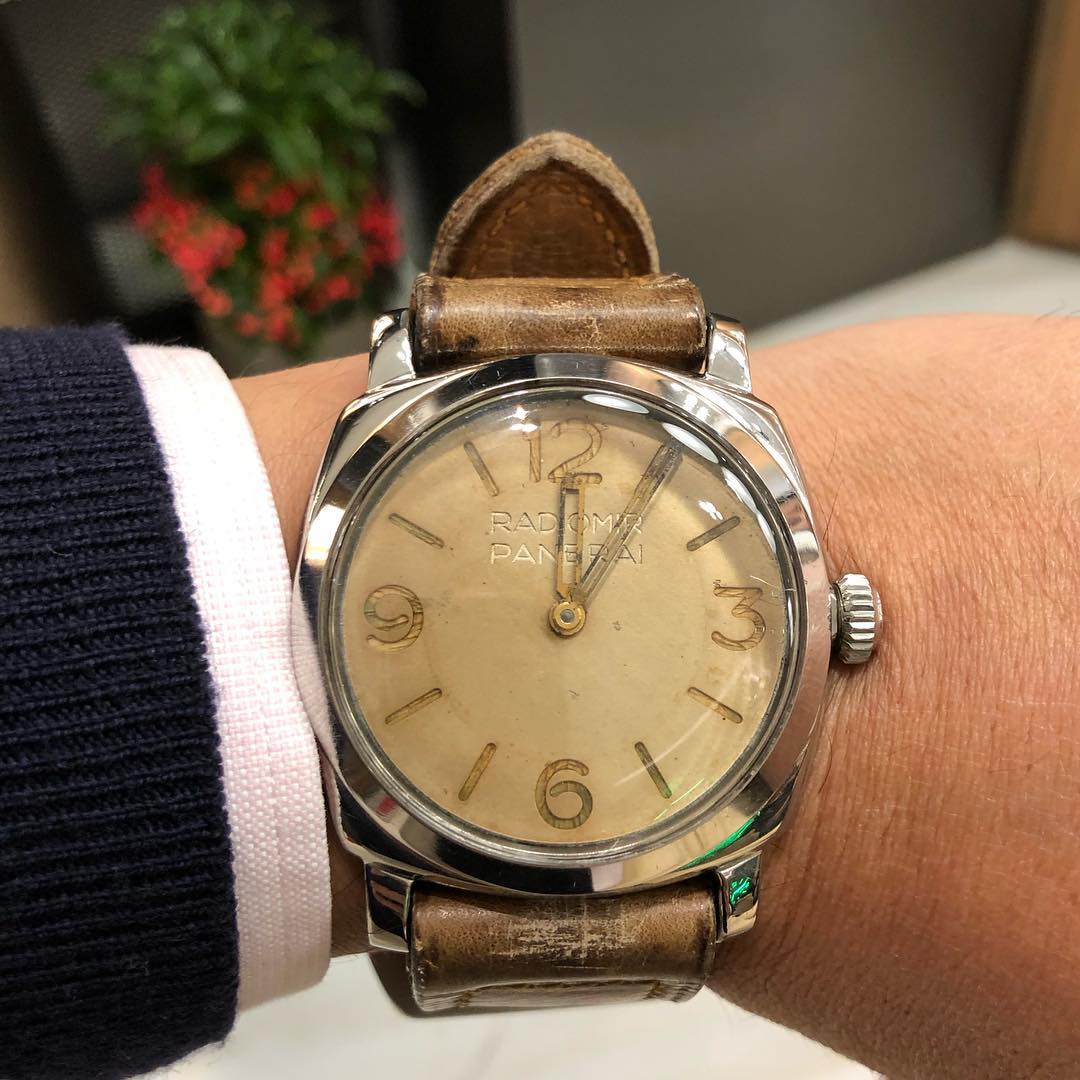
Case is in 47mm in stainless steel. After the world war 2, due to the reform of the Royal Italian Navy, the watches produced for them were all labeled “Marina Militare”; at the same time; they also supply watches to the Egyptian Navy. These Egyptian Navy watch would have “Radiomir Panerai” on the dial (later Luminor Panerai) The lugs were also reinforced; made from the same block of steel.

This is an iconic watch with a significant place in the US space exploration. While most people view the Speedmaster being an astronaut’s equipment; surpassing NASA’s tests and requirements, I think another historic event is more important. The Speedmaster was a key reason in the survival of the Apollo 13 crew members. While all the electronics on board were fried, the Apollo 13 crew was left with their Speedmaster to time critical burns (turning the engine on and off). Precise timing was paramount because this is how they steer the space craft in the correct direction and angle; in order to avoid burn up or bouncing off the atmosphere upon re-entry.
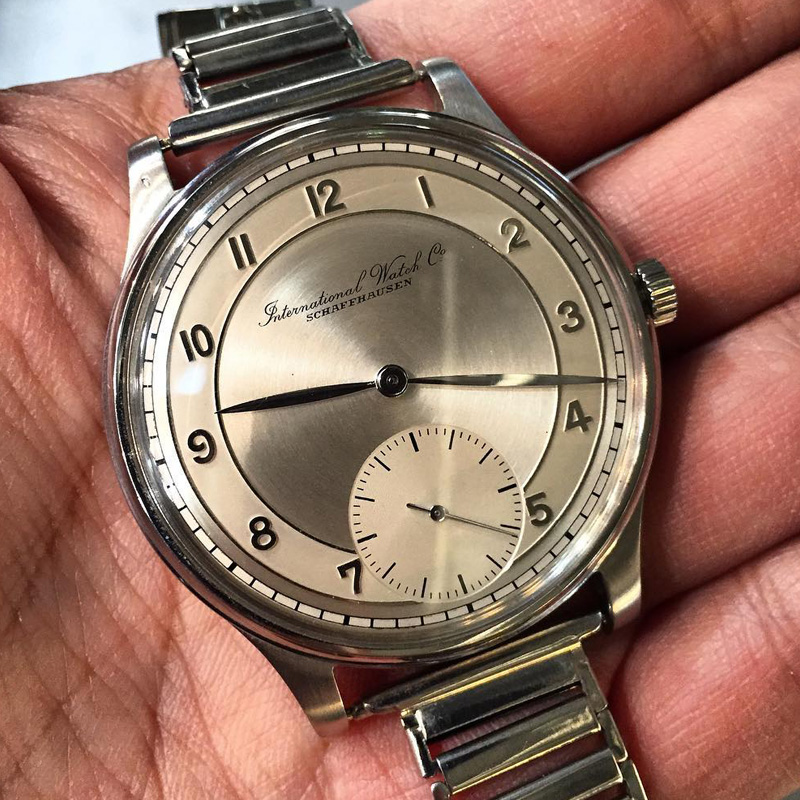
For those who like IWC watches, you may already know the Portuguese was introduced in 1939 but how did it begin? At the end of the 1930s two Portuguese businessmen – Rodrigues and Teixeira – who are in the watch industry visited IWC in Schaffausen inquiring the development of a large stainless steel wristwatch housing a movement with the precision of a marine chronometer. Development ensued and the birth of the Portuguese was born. Here is a, case size 42mm (bracelet non original)
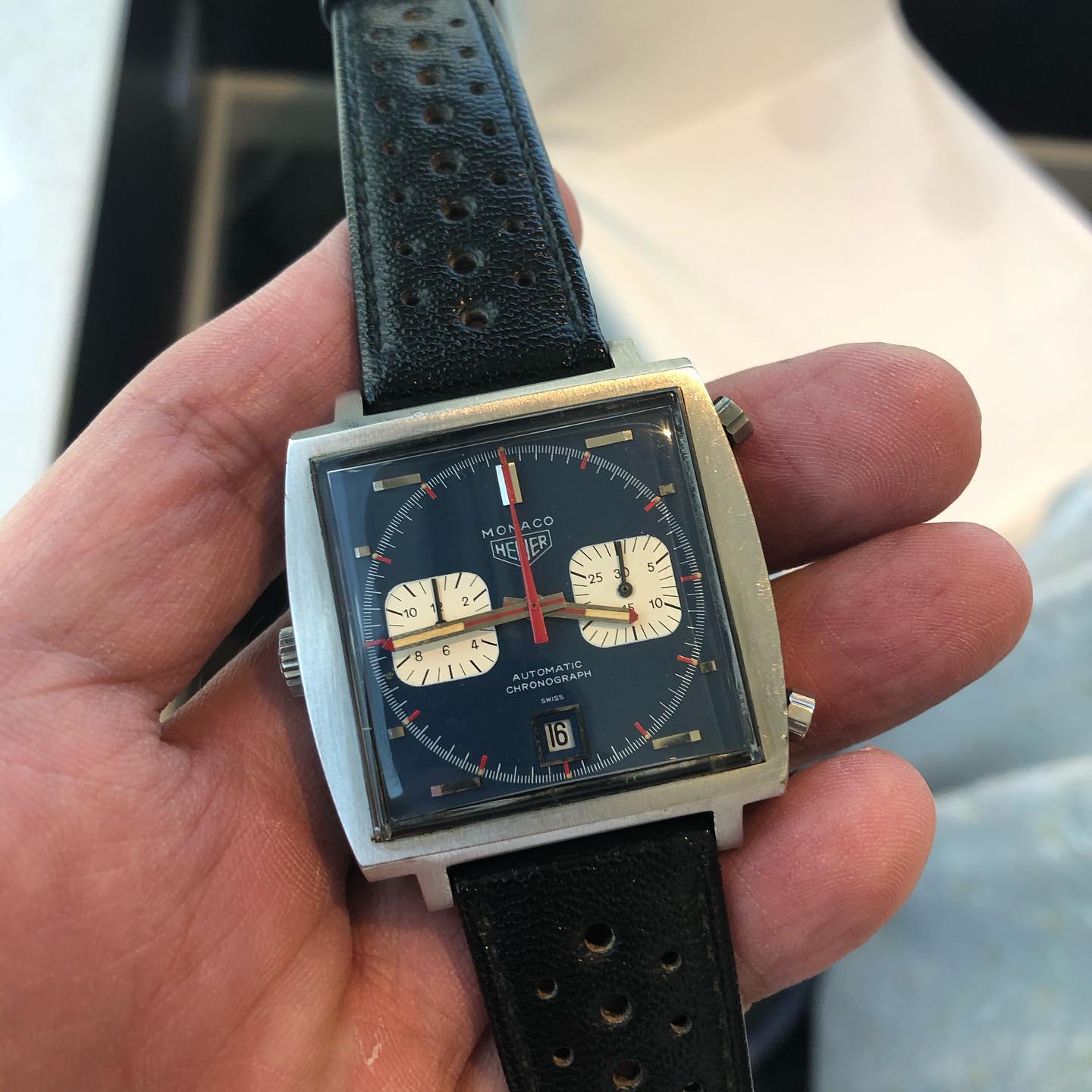
- Worn by Steve McQueen in the racing film, Le Mans.
- In 1971, Steven McQueen starred in the racing “documentary styled” movie Le Mans; directed by Lee Katzin.
- This is before the trend of brand using movies to build their presences; and the production team went out to purchase these watches at retail price.
- McQueen took one Monaco and gave it to his chief mechanic; thanking him for keeping him alive for the past few months.
- At first, Haig Alltounian didn’t want the watch but McQueen told him he had already done the engraving on the case back, he couldn’t give it to someone else.
- The Monaco watch was first introduced in 1969, bearing a few significant details, first and foremost is the case shape, being square isn’t the easiest to make it water resistant; but they’ve managed to get the Monaco to withstand water to 100m.
- 39mm stainless steel case.
- The movement was the legendary cal 11. In 1967 a group of companies; Breitilng, Hamilton-Buren, Heuer, and Dubois-Depraz— joint effort to develop a new automatic chronograph movement.
- In 1969, they unveiled the Cal. 11. The Heuer Caliber 11 was the company’s first and arguably most famous automatic chronograph movement.
- This watch is up for auction on December 12th at Phillips auction (New York).
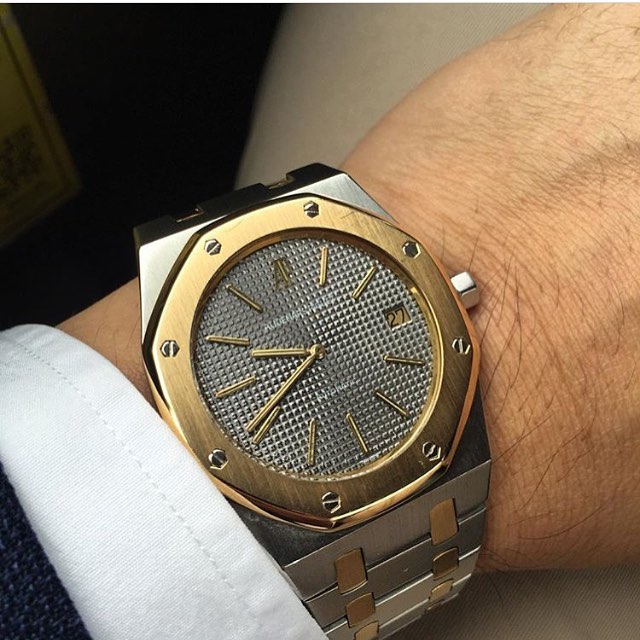
was first launched in 1972, it immediately captured the attention of all watch lovers in the world. There are 2 important aspect to this watch. Firstly for its truly original styling, the work of Gérald Genta, the incomparable designer who imagined its octagonal bezel, held in place by eight visible screws, and its integrated bracelet. Secondly, because the Royal Oak was the first high-end sports watch. It went against the trend and made this watch in steel, a metal that would go on to win new respect. The brand gave its Royal Oak a self-winding movement with calendar function. It took its innovative shape from a porthole on HMS Royal Oak, the ship that would also give it its name. The brand’s wider interest in trees came later. In the photo, features a very early 2nd generation Royal Oak in two tone 18K and Stainless steel
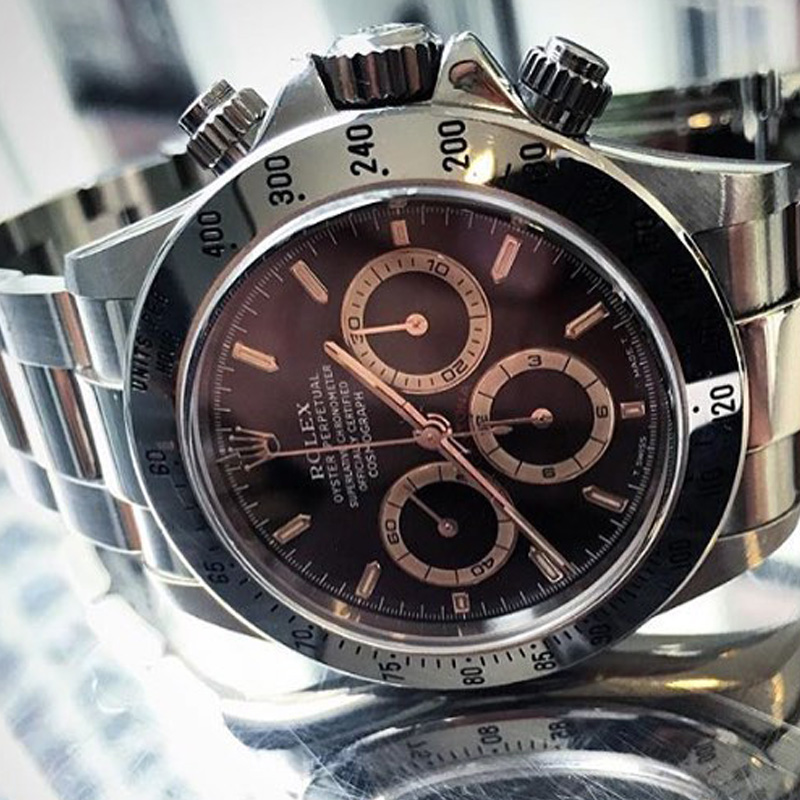
Rolex Daytona 16520, prior to 2000, all Daytona movements were from outside suppliers. The 16520 uses the movement from the El Primero by Zenith with modifications.
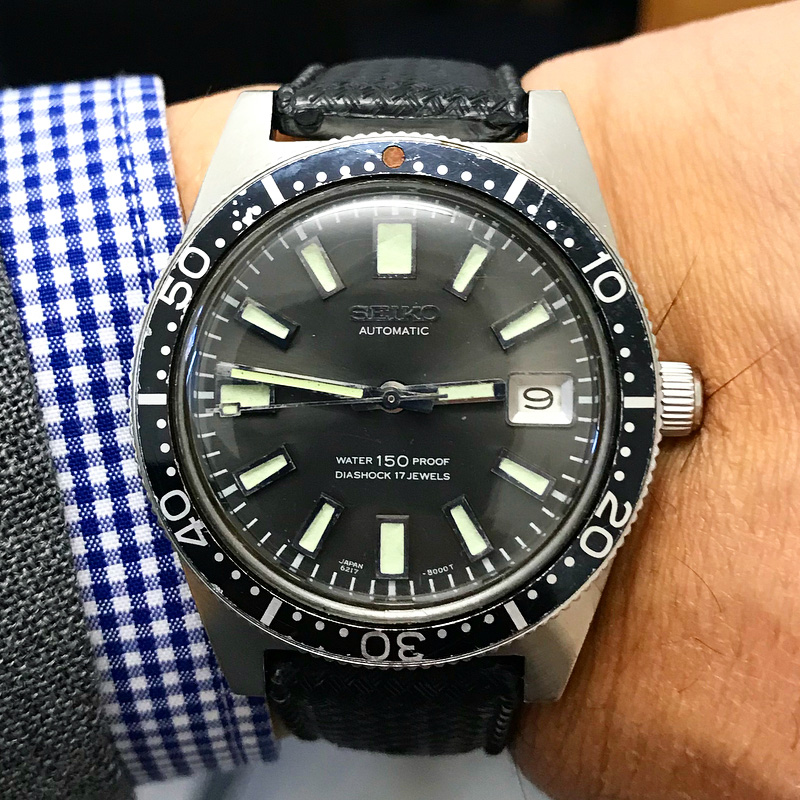
This was Japan’s first diver’s watch. It was an automatic 150m Diver’s. The launch of this model marked the start of Seiko’s pursuit for ever greater reliability and safety. In 1966, the watch proved its reliability and precision on the 8th Japanese Antarctic Research Expedition. The 6217-8000/1, which is better known as the Seiko 62MAS (autoMAtic Selfdater)Stainless steel case at 37mm. It featured a date function, a bi-directional bezel, stronger luminosity on the hands and indexes, and a big crown. It has a screw down case back but non-screw down crown. The Seiko 62MAS was rated to 150M of water resistance. While this doesn’t seem like a lot by today’s standard, it was Seiko’s deepest rating at the time (prior watch was rated only to 50M). The 6217-8000/1 caliber is a 18,000bph automatic, non hacking seconds with quick set date.
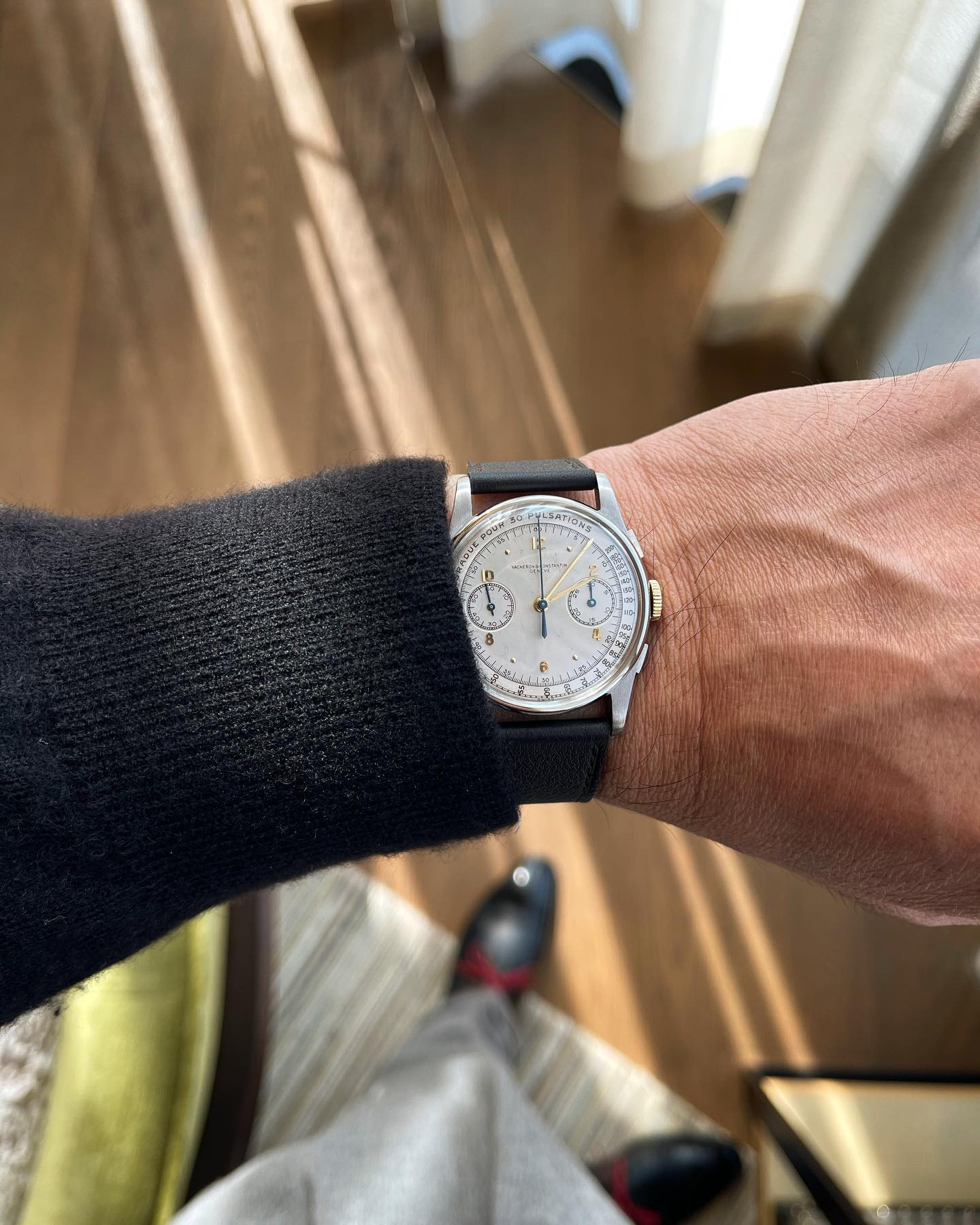
- Vacheron Constantin brings us the Maison’s heritage pieces.
- Chosen with patience and talent by the Masion’s heritage department specialist, vintage watches covering the entire 20th century are now part of the “Les Collectionneurs” collection.
- These pieces are carefully restored by the maison and comes with a certificate of authenticity, and a 2 year guarantee.
- 34 mm case in stainless steel.
- Manual winding movement cal 434, 30-minute counter chronograph wristwatch.
- Two-tone silvered dial, 30-minute counter at 3 o’clock, small seconds at 9 o’clock, pulsometer scale.