
Watch Facts
Quiz: 2024.07.06 Quiz (LOGO Game)

Established in 1865, Zenith holds a venerable position in watchmaking history. Its inception marked a pivotal moment in horology, aligning with the Industrial Revolution’s technological advances. In 1969, Zenith introduced the groundbreaking El Primero automatic chronograph movement, renowned for its high frequency and accuracy. This innovation solidified Zenith’s status as a trailblazer in precision timekeeping.
The brand’s logo, an open star emblem, mirrors its name’s celestial meaning. The five-pointed star embodies aspirations for excellence and represents the guiding principles of quality, reliability, and innovation. The emblem, reminiscent of the North Star, alludes to timeless navigation and a commitment to pushing boundaries in watchmaking.

Established in 1853 by Charles-Félicien Tissot and his son, Tissot is a distinguished Swiss watchmaker renowned for its innovative timepieces. In 1853, the company began as “Charles-Félicien Tissot & Son” in Le Locle, Switzerland. Tissot marked a milestone in 1930 by introducing the first non-magnetic watch. This commitment to innovation continued with the 1953 launch of the Tissot Navigator, the world’s first mass-produced antimagnetic watch.
The Tissot logo, comprised of the brand name in distinctive typography, echoes the company’s heritage of refinement and precision. Its logo has evolved over time, yet the essence of classic sophistication remains.
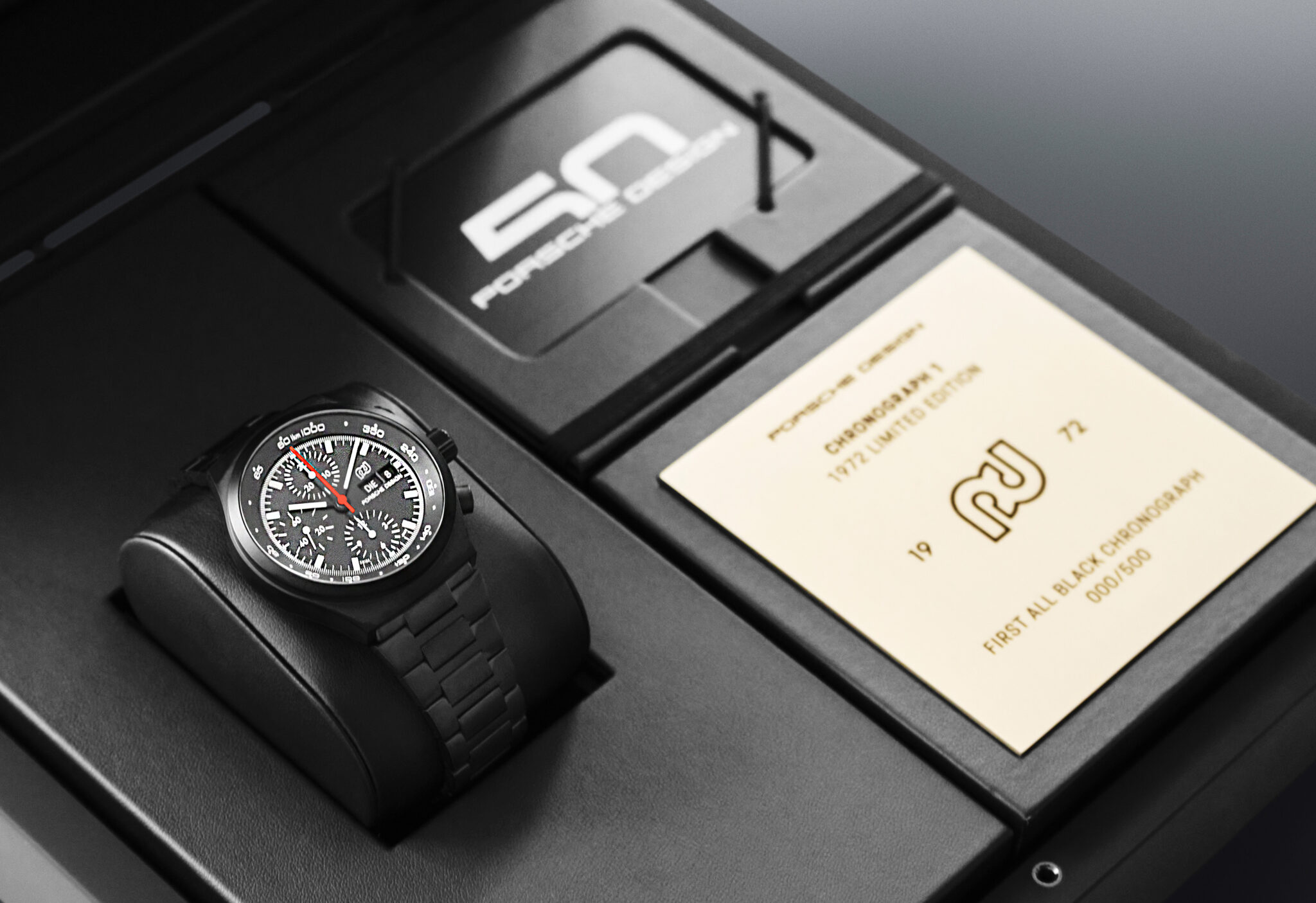
Established in 1972 by Professor Ferdinand Alexander Porsche, Porsche Design stands as a distinguished brand renowned for its innovation and functional aesthetics. The brand’s origins trace back to the creation of the iconic Chronograph I wristwatch, which introduced a novel all-black design. In 1978, the brand extended its expertise to eyewear, introducing the first pair of sunglasses with interchangeable lenses.
The Porsche Design logo, a shield-like emblem bearing the brand’s name, underscores its commitment to quality and design excellence. This logo, chosen for its timeless and distinguished appeal, represents the brand’s fusion of innovative engineering and sophisticated aesthetics.

Established in 1839 by Antoine Norbert de Patek and François Czapek, Patek Philippe stands as a pinnacle of Swiss watchmaking. A pivotal moment came in 1845 when Jean-Adrien Philippe joined, bringing key innovations like the crown winding mechanism. In 1868, the brand developed its first wristwatch. In 1932, the Stern family assumed ownership, nurturing Patek Philippe’s legacy.
The Patek Philippe logo, a stylized Calatrava Cross, has evolved since its introduction in 1857. Inspired by the Calatrava cross, which symbolizes a blend of art and science, the logo mirrors the brand’s core values. Its current form, a refined emblem, was introduced in the 1950s, embodying timeless elegance and tradition.
Patek Philippe is renowned for its handcrafted timepieces, exemplified by the 1925 debut of the cushion-shaped Gondolo watch and the celebrated Calatrava collection in 1932. The 1989 creation of the Calibre 89, a pocket watch with numerous complications, underscored the brand’s technical prowess.

Established in 1892, the Hamilton brand originated in Lancaster, Pennsylvania. Notable milestones include a focus on precision railroad pocket watches, crucial during its early years. In World War I, Hamilton supplied the military with reliable timepieces. The introduction of the electric Ventura watch in 1951 showcased innovation. The brand’s logo combines the name with a subtle crowned shield, reflecting its historical legacy and contemporary elegance. From railroad accuracy to military service and cinematic collaborations, Hamilton’s journey is characterized by adaptability and innovation, as mirrored in its emblem.
H. Moser & Cie. holds a rich history dating back to 1828. The brand was initially established by Heinrich Moser. Moser’s dedication to precision horology was recognized, earning him royal patronage from Tsar Nicholas I.
In 2005, the brand was revitalized, with a focus on traditional craftsmanship and innovative design. Notable models include the Perpetual 1, showcasing the minimalist yet sophisticated Moser aesthetic. The “Concept” series, introduced in 2015, emphasizes minimalist design, enhanced by its striking fumé dials.

Established in 1791, Girard-Perregaux is a distinguished Swiss watch brand. Notable dates include Constant Girard’s 1889 creation of the Tourbillon with Three Gold Bridges and the 1945 launch of the “Eagle” collection. The emblematic logo features an arrow-ended laurel wreath encircling “GP,” symbolizing victory and precision. Renowned for watches like Vintage 1945 and Laureato, Girard-Perregaux blends heritage and innovation seamlessly.

Established in 1735, Blancpain stands as one of the oldest Swiss watch manufacturers. Its founding by Jehan-Jacques Blancpain marked the inception of a legacy steeped in horological excellence. The company’s rich history is punctuated by key milestones, including the launch of the iconic Fifty Fathoms diving watch in 1953, designed for French combat divers. In 1983, Blancpain became part of the Swatch Group, which nurtured its traditions while fostering innovation.
Blancpain’s logo, a motif of a stylized moon and sun, embodies the brand’s commitment to artisanal craftsmanship and a ceaseless pursuit of precision. The dual celestial elements hark back to time-honored traditions and the cyclical nature of time itself. This emblem resonates with the brand’s dedication to harmonizing traditional watchmaking with modern innovation, mirroring the intricate interplay of celestial bodies.
Baume et Mercier, a distinguished Swiss watch brand, boasts a rich heritage dating back to 1830. Founded by the Baume family, it began as a small workshop in Les Bois, Switzerland. In 1918, the brand united with the Mercier family, leading to the establishment of Baume et Mercier. The brand’s hallmark has been an unwavering commitment to crafting watches characterized by elegance and accessible luxury.
In 1965, Baume et Mercier introduced the Riviera, a groundbreaking timepiece distinguished by its distinctive dodecagonal bezel. This design exemplified the brand’s fusion of innovative aesthetics and traditional craftsmanship.
The brand’s logo, an emblem of its values, embodies the harmonious union of heritage and modernity. Featuring the Greek letter Phi, symbolizing the golden ratio, it signifies the brand’s pursuit of balance, precision, and aesthetic refinement. This emblem reflects Baume et Mercier’s enduring dedication to horological excellence.

Founded in 1911 in La Chaux-de-Fonds, Switzerland, Ebel is a distinguished watch brand renowned for its refined elegance and craftsmanship. In 1914, the brand introduced its first wristwatch, marking the inception of its legacy. Ebel’s commitment to precision and artistry gained recognition in 1930 when it became a supplier to the British Royal Air Force.
Significant to Ebel’s history, the year 1977 witnessed the launch of the Sport Classic collection, combining sporty aesthetics with luxurious detailing. In 1982, Ebel introduced the Sport Wave collection, characterized by its distinctive wave-link bracelet, blending innovation with design.
Ebel’s logo is a stylized “E,” representing the brand’s name. This insignia embodies Ebel’s dedication to elegance and serves as a hallmark of its timepieces. The logo encapsulates the brand’s ethos of timeless sophistication, mirroring its commitment to artisanship and enduring design.