Watchmaking Is the Language of Jaeger-LeCoultre

A Conversation with Jérôme Lambert on Master Control Chronometre, Icons, History, and the Future of the Manufacture
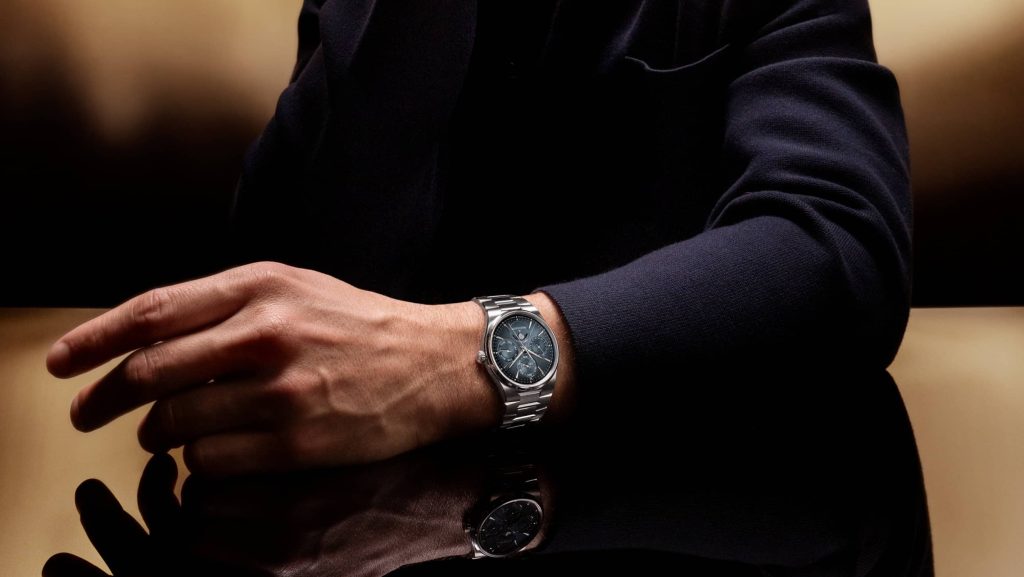
Watches and Wonders always brings a flood of new releases. Some watches are designed to impress immediately. Some compete for attention through colour, complexity, rarity, or sheer visual impact. This year, Jaeger-LeCoultre delivered something that, at first glance, might seem quieter than the grand complications around it: the Master Control Chronometre.
But that is exactly why it interests me.
The Master Control Chronometre is not the loudest watch in the room. It does not try to shock you at first sight. Instead, it asks a more Jaeger-LeCoultre kind of question: what happens when a manufacture with deep technical knowledge, a long history of functional watchmaking, and a reputation as the “watchmaker of watchmakers” creates a modern everyday watch?
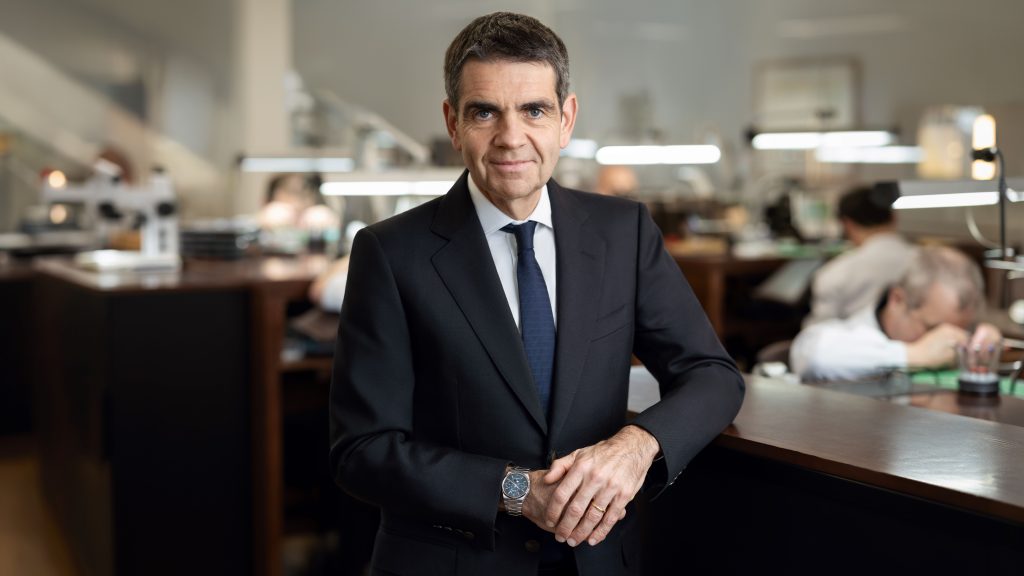
That was the starting point of my conversation with Jérôme Lambert, CEO of Jaeger-LeCoultre. We spoke about the new Master Control Chronometre, but the discussion quickly became wider: how JLC speaks to a new generation of watch lovers, how a brand protects its icons while still creating surprise, why history remains underappreciated, and why the experience of watchmaking should be rooted in the act of making itself.
For me, the conversation was also personal. I have always associated Lambert’s earlier years at Jaeger-LeCoultre with a very clear product culture — mechanisms, functions, complications, and real watchmaking content. JLC was not simply making beautiful watches; it was using mechanical thinking to explore questions of time, display, sound, energy, precision, and wearability. Looking at the Master Control Chronometre, I felt that spirit very clearly.
Not because the brand is repeating the past, but because the product reminds us of what Jaeger-LeCoultre does best: it speaks through watchmaking.
A Quieter Watch with a Bigger Message
I asked Lambert how Jaeger-LeCoultre speaks to a new generation of collectors. On one side, the brand has grand complications — spectacular creations that naturally demonstrate what the manufacture can do. On the other side, there is Master Control Chronometre, a collection that is more wearable, more approachable, and perhaps easier for a younger watch lover to understand.
His answer was very revealing.
Grand complications, he explained, have a power of their own. They are visually and emotionally demonstrative objects. Even before one understands every technical detail, there is already an emotional reaction. These watches build the reputation and legitimacy of the Maison. They show what Jaeger-LeCoultre can achieve at the highest level.
But Master Control requires another kind of conversation.
With a collection like Master Control, the message is not just spectacle. It is about DNA, roots, technical characteristics, consistency, and the ability to bring people closer to the world of the manufacture. Lambert pointed to what JLC has done with Reverso in recent years: allowing watch lovers to spend time with the collection, to understand its uniqueness, and to rediscover its relevance.
That same approach, he suggested, can be applied to Master Control.
This is where Master Control Chronometre becomes interesting. It is not the most complicated Jaeger-LeCoultre. It is not the most theatrical Jaeger-LeCoultre. It may not be the piece that dominates headlines in the same way as a grand complication. But it may be one of the clearest ways to understand what JLC can mean on the wrist every day.
A grand complication tells you what a manufacture can do at the extreme. A Master Control tells you how that manufacture thinks when the watch is meant to live with you.
For many new collectors, that may be the more meaningful entry point. Not everyone begins with a high complication. But a well-proportioned, technically serious, highly wearable Master Control can become a natural way into the world of Jaeger-LeCoultre. It can be the watch that says: this is not only a beautiful object, but a piece of mechanical culture.

“Recognize, Recognize, Recognize, Surprise”
One of the strongest moments in our conversation came when we discussed icons and innovation. Jaeger-LeCoultre has true icons: Reverso, Master Control, and a long history of important technical and aesthetic work. The challenge with icons is always the same. If you change too much, you risk losing the identity. If you change too little, the watch becomes static.
Lambert summarized the approach beautifully:
“Recognize, recognize, recognize, surprise.”
That phrase says a lot.
An icon must first be recognizable. The DNA, the style, the technical signature — these things must remain visible. But recognition alone is not enough. Lambert was very direct about it: a dead fish is still recognizable, but it has no life. A watch can be familiar and still fail to create desire. There has to be tension between heritage and inventiveness.
That creative tension is where good modern watchmaking happens. The watch must look like it belongs to the Maison, yet it must also move the story forward.
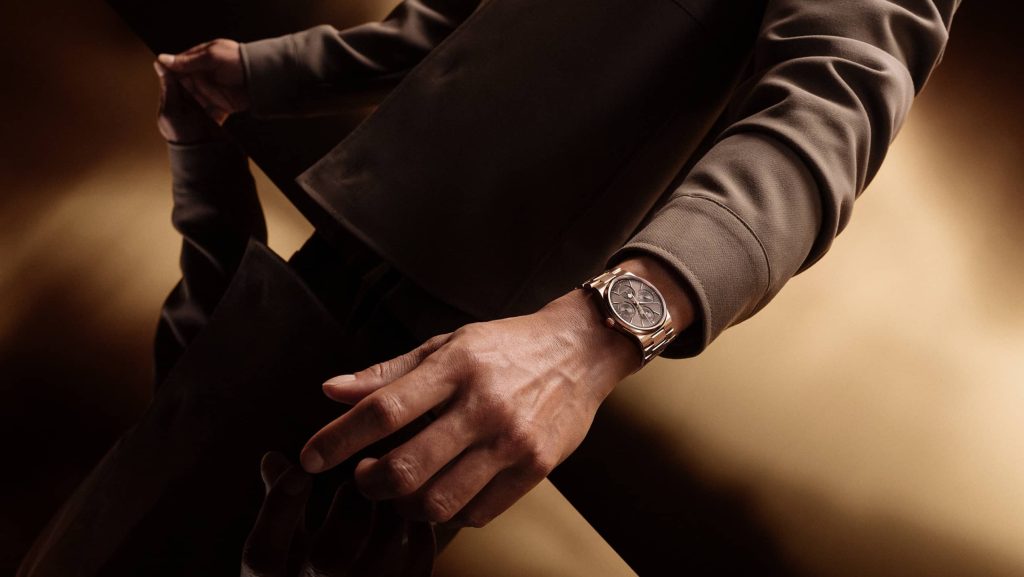
This is how I read the Master Control Chronometre bracelet. It would be easy to describe the collection simply as Jaeger-LeCoultre entering the integrated-bracelet conversation. But I think that would be too superficial. The more important question is whether the design still feels like JLC. Does it carry the right restraint? Does it have the right elegance? Does it feel connected to the Maison rather than borrowed from a market trend?
To me, that is the real test.
I also brought up the Milanese bracelet on the Reverso. Lambert agreed that it is a good example. It is surprising, but not strange. The Art Deco spirit of the Reverso and the character of a mesh bracelet have a certain historical and stylistic relationship. The result feels unexpected, but it also makes sense.
That is the difference between innovation and gimmick. One surprises you because it has been forced onto the watch. The other surprises you because once you see it, you wonder why it did not exist earlier.
Not Just an Integrated Bracelet
The bracelet will naturally get attention. In today’s market, any integrated-bracelet watch immediately enters a crowded conversation. Collectors will compare proportions, links, case integration, finishing, and the way the watch sits on the wrist. That is unavoidable.
But if we only discuss the bracelet, we risk missing the more important point.
Master Control Chronometre brings together several things that Jaeger-LeCoultre does best: mechanical content, function, precision, wearability, and a quiet sense of refinement. It is not trying to overwhelm the viewer. It is not trying to become another brand’s sports watch. It is not shouting for attention.
That restraint matters.
The JLC I have always admired is a brand that builds identity through mechanisms and functions. It is a brand that can make a watch interesting not only because of how it looks, but because of how it is thought through. A watch like Master Control Chronometre should not be understood only as a product update. It is a signal of how Jaeger-LeCoultre wants to express itself: modern, wearable, technically grounded, and still unmistakably tied to the manufacture.
This is perhaps why the collection feels important to me. It is not dramatic in the way a grand complication is dramatic. But in some ways, it may be more revealing. It shows how a manufacture translates its deeper watchmaking identity into something one can actually wear every day.
Distribution Is About Quality, Not Just Control
We also spoke about distribution, a topic many brands tend to answer in predictable ways. The industry has spent years moving toward more controlled retail networks and stronger boutique strategies. At the same time, some major maisons have shown that retail partners still have a role, especially when relationships are deep and well managed.
Lambert’s answer was not ideological. He did not frame the future as boutique versus retailer. His point was quality.
Jaeger-LeCoultre, he said, exists within a broader ecosystem. Retail partners have been part of the Maison’s reality for a very long time, and the brand does not exist without them. The rhythm of creativity and development also depends on introducing new lovers of watchmaking to the products, and good partners can play a meaningful role in that.
But scale matters. Quality matters.
He mentioned that in one recent week, the American market had received eight requests to open doors. The answer is not to open eight doors in one week. Not because the brand only wants internal boutiques, but because every point of contact — boutique or partner — must be developed with depth, quality, and a proper sense of scale.
This is very consistent with how he speaks about watchmaking. Jaeger-LeCoultre is not trying to be a mass brand. It is not aiming to make hundreds of thousands or millions of watches. Watchmaking at this level requires training, time, and continuity. Even training a watchmaker can take years. So the distribution network should reflect that same discipline.
I found this answer important because it avoids the simple narrative of direct retail being automatically better. A great boutique experience can be powerful, but a great retail partner with a long-standing relationship can also be powerful. Some clients build relationships over generations. Some trust a particular retailer because that retailer has been part of their family’s watch journey. If the quality of the experience is there, the channel becomes secondary.
For Lambert, the real question is not who owns the door. The real question is whether the client receives the right experience, the right knowledge, and the right long-term relationship.
Experience Should Come from Making
This led naturally to the subject of client experience. I told Lambert that today, very few people buy a mechanical watch simply to tell time. The phone tells time. The computer tells time. Everything tells time.
I made a comparison with cameras. I do not need a camera in the purely functional sense, because my phone can take pictures. But the pleasure of buying and using a camera comes from something else — the experience of the object, the tool, the learning, the process.
Lambert’s answer was nuanced. He said he agreed and disagreed.
He used running shoes as an example. A person may never run a marathon under two hours, but he can still care deeply about the details of his shoes. In fact, he may spend more time studying the shoes than improving his training. Why? Because part of the pleasure lies in quality, precision, and the technical details of the object itself.
I liked this answer very much because it explains mechanical watches today in a more honest way.
Yes, we no longer need mechanical watches to tell time. But that does not mean function has become irrelevant. Instead, function has changed meaning. It is no longer only about utility. It becomes part of appreciation. The pleasure comes from understanding how something works, why a mechanism is arranged in a particular way, why a display feels balanced, why a complication is satisfying, and why the object gives you confidence when you wear it.
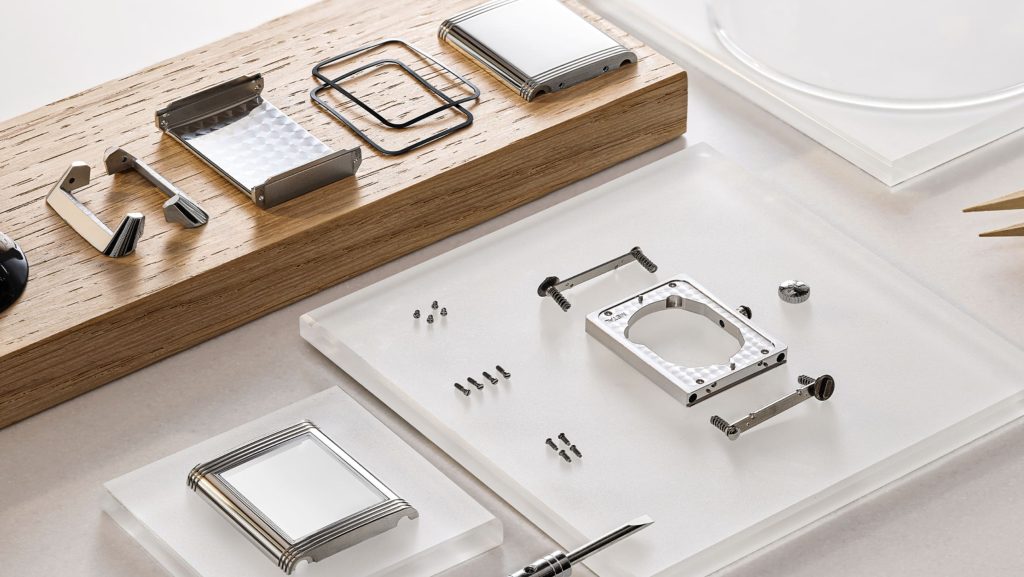
Lambert also made a broader point about experience. For Jaeger-LeCoultre, as the “watchmaker of watchmakers,” the experience should be connected to making. Not just events, hospitality, or beautiful settings. The experience should help people feel the process of creation.
He compared it to other forms of making — cheese, chocolate, fragrance. There is something deeply human about watching something materialize. Making fire, painting, building, leaving a trace: these things connect to something fundamental in us.
That is a very good way to understand what a Jaeger-LeCoultre experience should be. It should not merely entertain. It should reveal how things are made. It should bring the client closer to the mechanism, the craft, the decisions, the hands, and the thinking behind the watch.
For a brand like JLC, that is far more powerful than simply creating another luxury environment.
The Underappreciated Power of JLC History
Near the end of the interview, I asked Lambert what he feels is still underappreciated at Jaeger-LeCoultre.
His answer was immediate: history.
I agree with him completely.
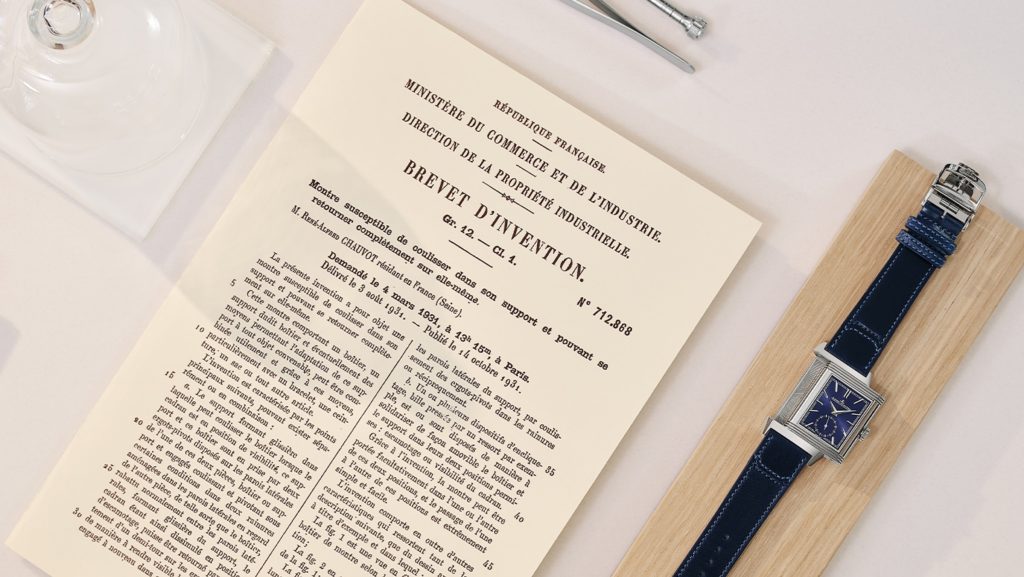
Many people know Reverso. Many people know Jaeger-LeCoultre as a high-complication manufacture. Many serious collectors know its movements, its technical ability, and its role as a supplier and maker. But even then, I think the full depth of JLC’s history is still not properly understood by the wider watch community.
Lambert spoke about the importance of bringing that history back, explaining it, and sharing it. He mentioned that Jaeger-LeCoultre has done extraordinary things across different eras — not only in recent decades, but in earlier periods of wristwatch history as well. The Maison has contributed to complications, movements, and important watches in ways that are still not fully appreciated.
This is where the conversation became very close to something I often think about. Today, too many people focus first on secondary-market value. Of course value matters. I spent many years in the auction world, and I understand very well that market value is part of the collecting conversation. But value is often the result, not the reason.
The deeper question is: why should a brand matter in the first place?
Historical value is not always immediately reflected in price. Sometimes it takes years, even decades, for the market to understand what was important. Lambert mentioned that some historical Jaeger-LeCoultre pieces are now beginning to crystallize in value. Watches that once appeared quietly in smaller auction settings are now being recognized very differently. Some rare historical complicated pieces are reaching much stronger prices.
That is a good sign, but more importantly, it confirms that knowledge changes value.
When collectors understand the history, they begin to see the watches differently. A watch is no longer simply a reference number or a market price. It becomes part of a larger story — of a manufacture, of technical development, of design, and of the way people thought about time in a particular period.
This is why Master Control Chronometre should also be read through history. If one sees it only as a new watch with an integrated bracelet, the discussion becomes narrow. If one sees it as part of Jaeger-LeCoultre’s long-standing relationship with precision, function, and daily wearability, then it becomes much more meaningful.
Restoration, Ferrari, and the Responsibility of a Manufacture
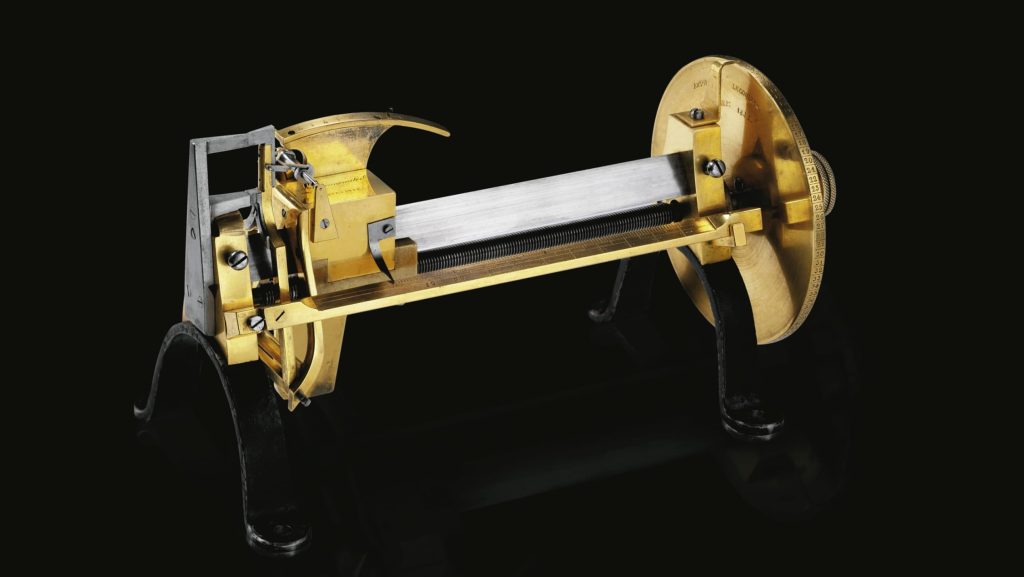
We also briefly touched on certified pre-owned. Lambert did not dismiss the idea, but he was clear that before entering that world, Jaeger-LeCoultre must first be able to do things properly. For now, one of the most important foundations is restoration.
He mentioned something that I think deserves much more attention: Jaeger-LeCoultre accepts restoration of watches from any era, with no time limit.
To me, this is a very powerful message for collectors.
When a manufacture says it will restore any watch it has made, regardless of age, that is not just after-sales service. That is a long-term commitment to its own history. It means the brand carries responsibility for what it created. It also means maintaining knowledge, parts, tools, techniques, and people capable of working on watches from different periods.
Lambert pointed out that when you make your own movements, you must also maintain a huge world of components and spare parts. The deeper the manufacture’s history, the greater the responsibility.
During the conversation, I told him this reminds me of Ferrari Classiche. Of course, if you own an old Ferrari, you can bring it to a specialist garage. There are many excellent independent experts. But when Ferrari itself restores and certifies its own historical cars, the meaning is different. It is not just repair. It is the factory standing behind its own past.
For Jaeger-LeCoultre, the same idea is very powerful. A historical watch can be repaired by a skilled watchmaker, but when the manufacture itself is willing to take it back, understand it, restore it, and preserve its integrity, it becomes part of the brand’s living history.
I told Lambert that this is something JLC should communicate more clearly. For serious collectors, it matters. It tells them that the brand is not only interested in selling today’s watches. It is also willing to take responsibility for yesterday’s watches.
That kind of promise creates trust.
Why Master Control Chronometre Matters
After speaking with Lambert, I understood the Master Control Chronometre more clearly.
It is not simply Jaeger-LeCoultre entering the integrated-bracelet market. It is not simply a new product family. It is not just a watch designed to be more contemporary.
It is a signal.
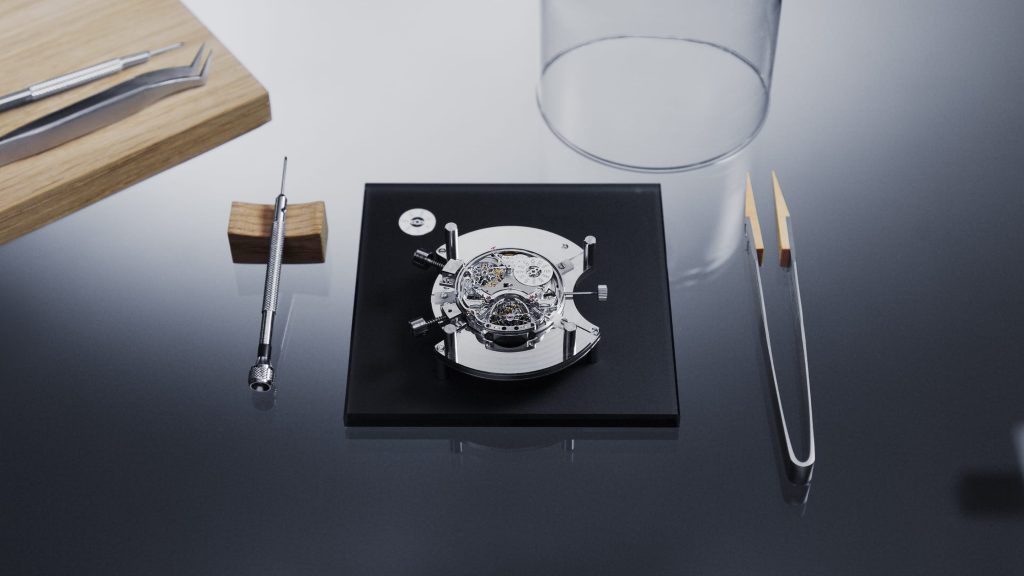
It shows a manufacture thinking about how to express its core values today: mechanism, precision, function, history, wearability, and craft. It shows how JLC can take its deep technical culture and translate it into something relevant for the modern wrist.
I am happy Jérôme Lambert is back because when he speaks about Jaeger-LeCoultre, he does not speak like someone chasing a short-term trend. He speaks about the Maison, its products, its mechanisms, its icons, its history, its clients, and its responsibility. These may sound like separate topics, but in this conversation they all pointed in the same direction.
Jaeger-LeCoultre is strongest when watchmaking itself is the message.
The Master Control Chronometre may not be the loudest watch in the room. It may not have the immediate drama of a grand complication. But perhaps that is exactly why it matters. It asks to be understood, not just noticed.
And for a manufacture like Jaeger-LeCoultre, that may be the most appropriate kind of watchmaking statement.